
Whether you are listening to music, watching a film or simply having a cosy evening chatting with friends, poor acoustics can seriously spoil your evening. To stop irritating echoes and reverberation haunting your living room every day, Geluidsisolatie Deal has a few tips with which you can improve the acoustics in your living room.
Why are good acoustics important in your living room?
The living room is the place for relaxing and spending time with people you know, for example your friends or family. Poor acoustics, however, can cause annoying reverberation and echoes. This is often caused by hard materials such as a tiled floor, bare walls or glass. Reverberation in a room can cause irritation. That is why it is very important to pay attention to improving the acoustics in the living room.
Acoustic wall and ceiling panels for the living room
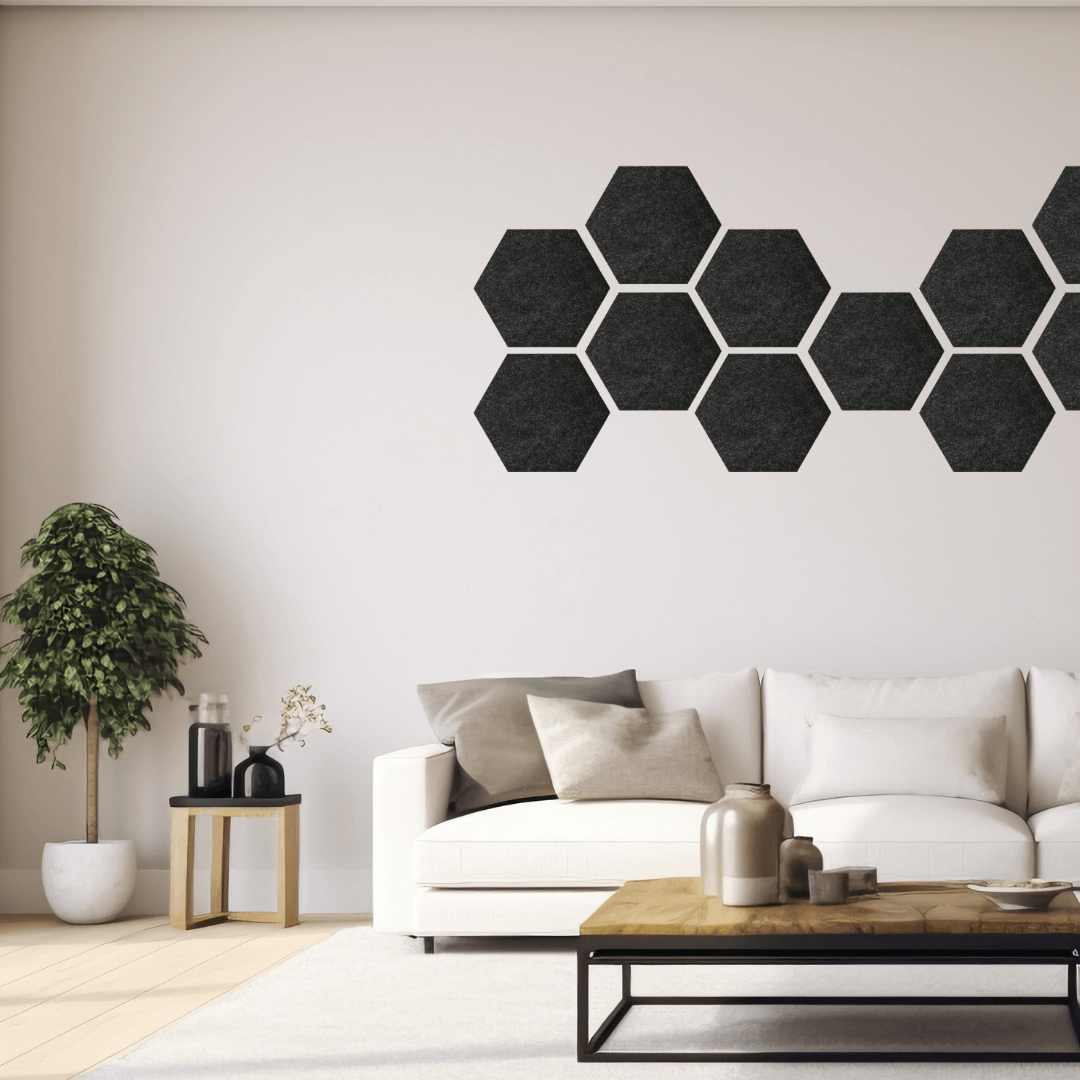
One of the most efficient ways to improve the acoustics in the living room is to use acoustic panels in your living room. These panels are specially designed to absorb sound waves and reduce reverberation, which creates a calmer and more pleasant sound environment. They are available in different materials, colours and designs, so they fit seamlessly into any interior. Whether you choose wall panels, ceiling panels or free-standing elements, acoustic panels offer a practical and stylish solution for a better sound experience at home. Want to know more about how these panels work and which options suit your living room best? Then read our extensive blog on acoustic panels in the living room.
Tips for improving your living room acoustics
Other sound insulation in the living room
Besides the acoustics of your living room, you can also improve the overall sound insulation of your living room. This not only helps improve the sound quality in the living room, but can also prevent noises from outside from disturbing your living room experience. A few solutions that can help here are, for example, fitting double or even triple glazing or fitting mass-loaded sheets in the walls.


