
Want to make your outboard motor quieter? Discover how to insulate the engine cover or well and what to look for when choosing the right sound insulation.
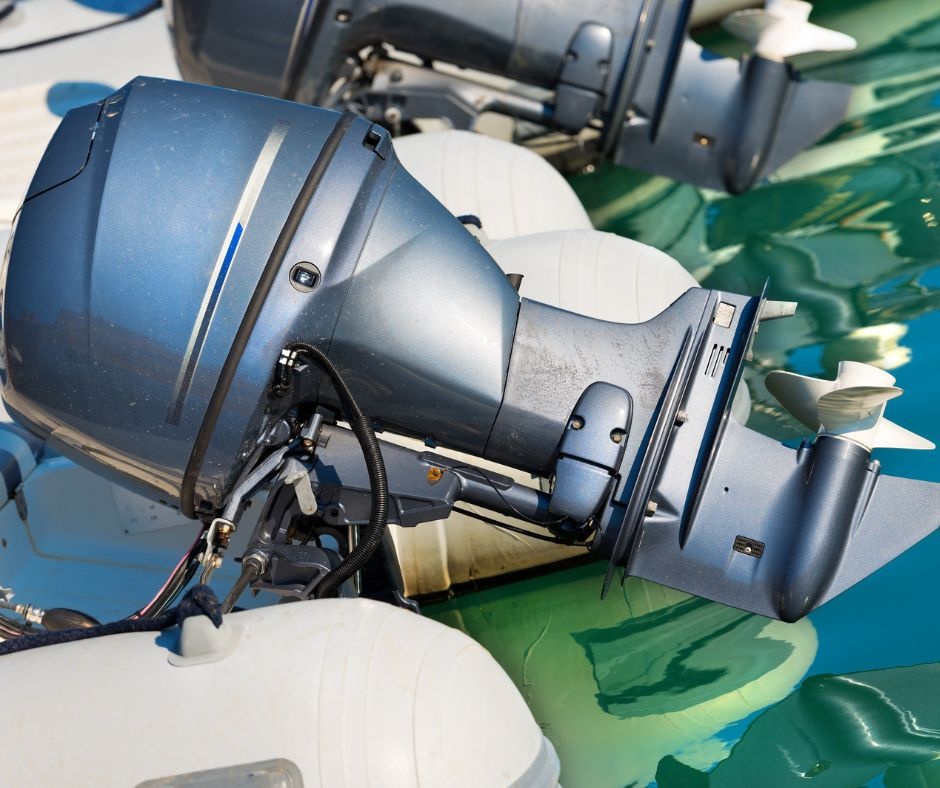
Do you want to insulate your outboard motor to reduce engine noise while boating? With the right sound insulation, you can make an outboard motor quieter in certain situations. The possibilities depend mainly on the available space, the temperature and the position of the motor.
An outboard motor in an outboard well requires a different approach to a motor that hangs directly on the transom of the boat. By fitting suitable parts of the engine space or engine cowling with sound-absorbing material, you can limit the transmission of noise. It is important that the insulation can withstand the conditions around the motor and does not obstruct cooling.
There are two ways to improve the sound insulation of an outboard motor. Which method is suitable depends on the construction of your boat and motor. The available space and the temperature in particular determine which options there are.
Suitable for: outboard motors fitted in a partly enclosed engine space with a hatch.
Why choose it: by fitting the walls and, if applicable, the hatch with suitable sound absorption, you can reduce the reflection of engine noise.
Suitable for: outboard motors with a standard engine cowling, when the manufacturer permits extra insulation and enough space is available.
Why choose it: suitable sound absorption on the inside of the cowling can reduce part of the engine noise.
With an outboard motor with a compact cowling, caution is important. Some parts can reach high temperatures and the space under the cowling is often limited. So always check the engine manufacturer's instructions first before fitting insulation material.
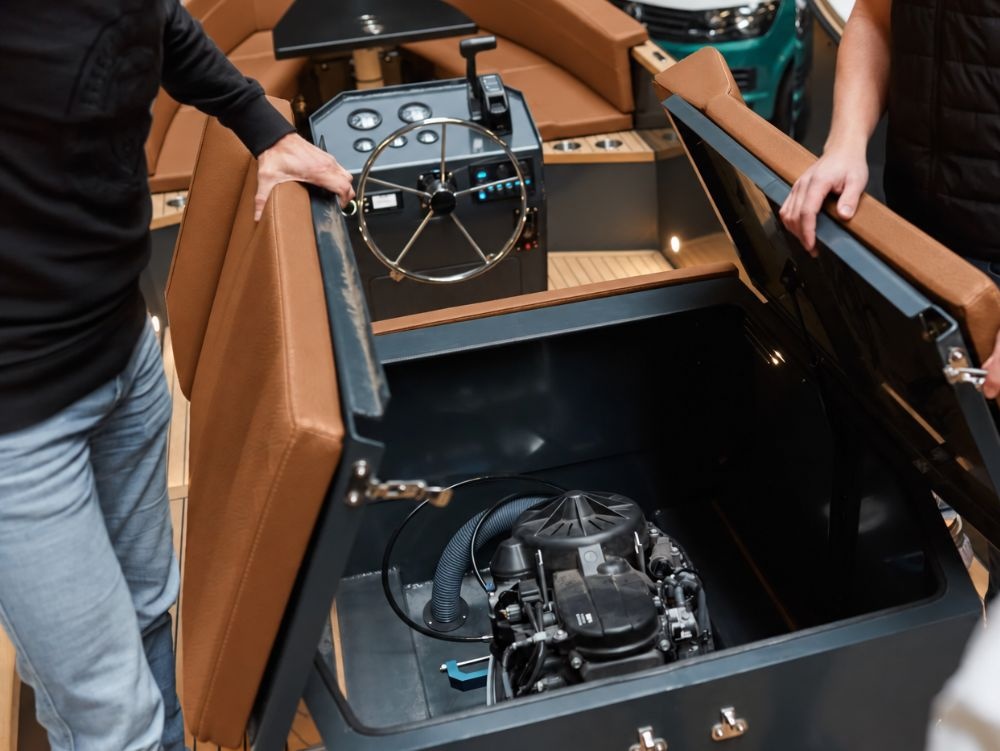
When your outboard motor is fitted in an outboard well, there are often more options for damping engine noise. An outboard well is a partly enclosed space in the boat in which the motor hangs. The walls and the closable hatch can reflect the noise, so it remains clearly audible around the seating.
By fitting suitable sound-absorbing sheets to the walls of the outboard well, you can limit these reflections. Preferably choose material with a protective top layer that is suitable for damp environments and occasional contact with oil or dirt.
Standard egg crate foam without a suitable protective layer is generally not a good choice for an engine space where moisture, oil or dirt may be present. An absorption sheet designed for this purpose, with a protective top layer, is often more practical in maintenance and use.
Do you want to give the sound cowl of your outboard motor extra insulation? First check whether the manufacturer permits this. Then use the step-by-step guide below as preparation for a safe and careful installation.
Never simply apply insulation material against hot, electrical or moving engine parts. If the cowling offers too little space, extra insulation on the inside may not be advisable.
Not every sound insulating material is suitable for use around an outboard motor. When choosing material, sound absorption, temperature resistance, moisture resistance and the available space play an important role.
Suitable for: the walls and hatch of an outboard well or other suitable surfaces in an engine space.
Why choose it: the material absorbs part of the incident sound and helps to reduce the reflection of engine noise.
A suitable protective PU top layer can protect the underlying material from contamination by moisture, oil and dirt.
Suitable for: applications where higher temperatures occur and for which the specific insulation material has been approved.
Why choose it: certain heat-resistant mats combine thermal insulation with sound-absorbing properties.
Always check the maximum operating temperature of both the material and any self-adhesive backing.
Suitable for: engine spaces where moisture, oil or dirt may be present.
Why choose it: a suitable protective layer helps to limit contamination of the absorption material and makes the surface easier to maintain.
Check that the whole sheet, including any edges and adhesive layer, is suitable for the conditions.
When making an outboard motor quieter, it is important to distinguish between sound absorption and sound insulation. The terms are often used interchangeably, but they have different functions.
Sound-absorbing material reduces the reflection of sound within a space. This is especially interesting with an outboard motor in an outboard well, where engine noise can reflect off the walls and hatch.
Sound insulation limits the transmission of sound from one space to another. The mass, sealing and construction of the enclosure play an important role here, among other things.
A sound-absorbing sheet can help to reduce the noise level, but does not automatically block all engine noise. Vibration, the exhaust system and the construction of the boat also determine how much noise ultimately remains audible.
How much noise you can reduce depends on the type of outboard motor, the engine speed, the position and the insulation material used. In particular, the noise that is reflected within an outboard well can be tackled with suitable sound absorption.
With an outboard motor with a standard cowling, the result is harder to predict. The cowling often offers little space and part of the noise comes from the exhaust, the propeller and vibration passed on through the boat's construction.
So do not expect an outboard motor to become completely silent. The aim of sound insulation is to reduce disturbing engine noise where possible, without affecting the operation and safety of the motor.
When the construction of the boat and motor is suitable, fitting sound insulation can offer several benefits.
Suitable sound absorption can reduce the reflection of engine noise in an outboard well.
Less disturbing noise can make boating and holding conversations more pleasant.
A suitable protective top layer helps to limit contamination of the insulation material by moisture, oil and dirt.
The choice of material can be adapted to the available space, temperature and construction of the motor installation.
There is no standard material for insulating an outboard motor that is suitable in every situation. With a motor in an outboard well, a sound-absorbing sheet with a protective top layer can be an interesting choice. For applications closer to hot engine parts, additional temperature resistance requirements matter.
Also always check that the thickness of the material fits the available space. The fixing method, moisture resistance and fire safety are also important for a durable and responsible application.
At Geluidsisolatie Deal you will find sound-absorbing sheets and insulation materials for various applications. With these, you can fit suitable surfaces in an engine space with sound absorption and possibly reduce disturbing engine noise.
Because every outboard motor is different, there is no single solution that suits every motor. The right choice depends on the position, available space, temperatures and technical instructions of the engine manufacturer.
Not sure which insulation material is suitable for your situation? Get in touch with us. Preferably state the make and type of outboard motor, along with photos of the engine space or cowling. That way we can help you think through the choice of material in a more targeted way.
Always check modifications to the engine cowling with the engine manufacturer or a certified engine specialist.
Ask for advice on sound insulation
No, not every outboard motor is suitable for extra insulation. With a motor in an outboard well, there are often more options for fitting sound-absorbing material. Under a standard cowling, the space is usually limited. Always check whether the manufacturer permits extra insulation and whether cooling and air supply are maintained.
For an outboard well, a sound-absorbing sheet with a protective top layer may be suitable. In places with higher temperatures, special heat-resistant materials are needed. Always check the maximum operating temperature, thickness, moisture resistance and any temperature limit of the adhesive layer.
Do not apply insulation material directly to engine parts without the manufacturer's express approval. Contact with hot or moving parts can be dangerous. Also make sure the necessary clearance around the motor is maintained.
Standard egg crate foam without a suitable protective layer can be sensitive to moisture, oil and dirt. As a result, the material can become contaminated and less suitable for long-term use in an engine space. So preferably choose an absorption sheet that is specifically suitable for the conditions in the outboard well.
Keep all air inlets, ventilation ducts and any exhaust openings free. Insulation material must not restrict the motor's air supply and cooling. Follow the engine manufacturer's instructions and, if in doubt, have an engine specialist take a look.
In some situations you can make an outboard motor quieter by fitting the outboard well or permitted parts of the cowling with suitable sound-absorbing material. Good maintenance and tracing unusual vibration can also help to prevent unnecessary noise nuisance.
An extra sound cowl or enclosure can affect the air supply, cooling, exhaust gas discharge and operation of the motor. So do not simply make a closed enclosure around an outboard motor. First have it assessed whether such a modification is safe and technically sound.
Find the order you'd like to withdraw
Enter your email address and order number.
Check your mailbox
If your details match an order, you'll receive an email with a link to view and manage it.