
What is bonnet insulation and when do you choose it?
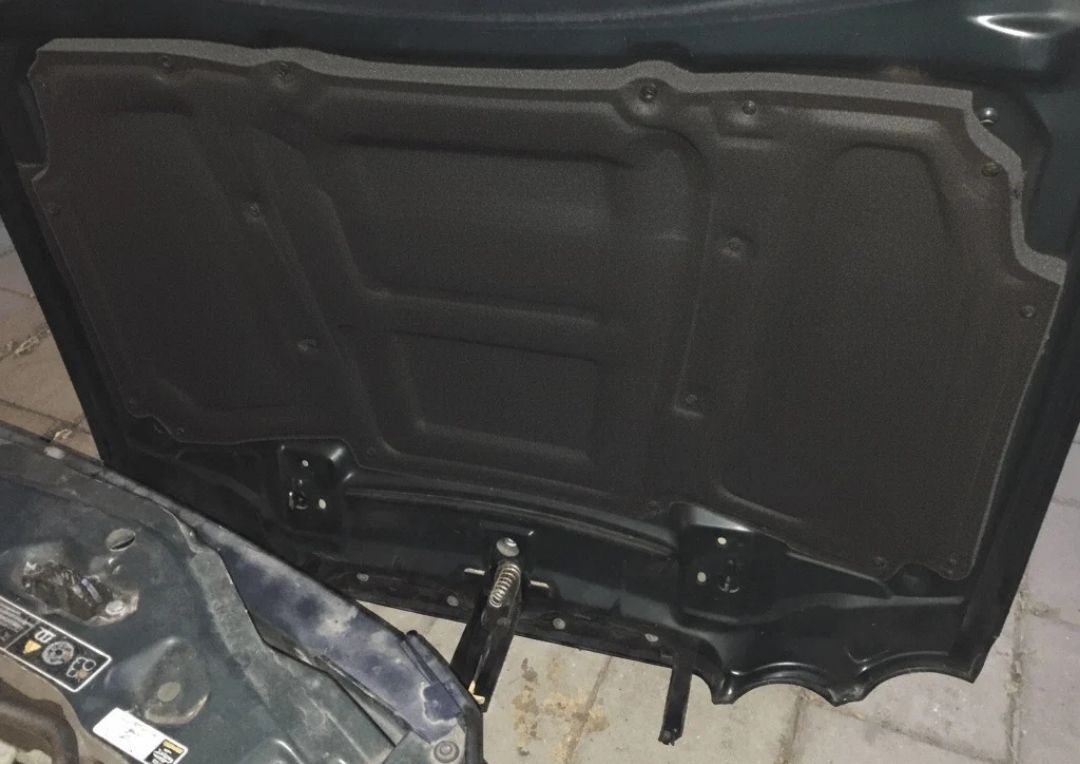
Bonnet insulation is a special lining on the inside of the bonnet. This layer helps to dampen engine noise, manage heat better and finish the engine bay more neatly. Especially in older cars, commercial vehicles, vans and campervans, the original bonnet insulation can come loose, crumble or become damaged over time.
Many vehicles already have insulation under the bonnet from the factory. That lining can wear out due to heat, oil, moisture, vibration or age. In practice we also regularly see bonnet insulation that has been gnawed by martens or other animals. When that happens, the lining not only loses its damping effect, but loose pieces can also come into contact with hot or moving parts in the engine bay.
Replacing bonnet insulation is therefore often not a luxury, but a practical and safe choice. Especially when you hear more engine noise while driving, the old lining is visibly damaged or you want to refinish the engine bay of your vehicle.
Which vehicles is bonnet insulation suitable for?
Universal bonnet insulation can be used on various vehicles. The basis is the same: you fit heat-resistant insulation material to the inside of the bonnet. The difference lies mainly in how the vehicle is used, the space available under the bonnet and how audible the engine noise is.
Car
Common problem: more engine noise in the cabin, damaged original lining or missing bonnet insulation.
Practical application: suitable for daily use, project cars, classics and cars where the original insulation needs replacing.
Commercial vehicle or van
Common problem: audible engine noise on long journeys, cold starts or when driving with a heavy load.
Practical application: interesting for drivers who spend many hours on the road and want more peace in the cab.
Campervan
Common problem: tiring engine noise over long distances, especially in older campervans or diesel engines.
Practical application: part of a broader approach with floor, wheel arch and cab insulation for more travel comfort.
Benefits, risks and mistakes you are better off avoiding
A well-insulated bonnet can contribute to more peace in the vehicle and a neater finish of the engine bay. Bonnet sound insulation mainly helps to reduce direct engine noise radiated through the bonnet. In addition, suitable heat-resistant bonnet insulation can help limit the effect of heat on the bonnet.
Do note: not every insulation material is suitable for use under the bonnet. In practice we regularly see the wrong materials chosen, such as home insulation, carpet, standard foam or cheap boards of unknown origin. These materials are often not designed for heat, oil, moisture and constant vibration in an engine bay.
Mistakes are also often made during installation. For example, the substrate is not degreased properly, so self-adhesive bonnet insulation does not bond sufficiently. Sometimes ventilation openings are covered or too little distance is kept from moving parts. This can lead to a lining coming loose, damage or unsafe situations.
Practical example: replacing old bonnet insulation
A common situation is an older car, van or campervan where the original bonnet insulation is partly hanging loose or starting to crumble. The driver often notices that the engine sounds louder than before, especially when accelerating or idling. On inspection under the bonnet, the old lining turns out to be brittle, dirty or missing in places.
In such a case it is usually wiser to remove the old insulation completely and replace it with new universal bonnet insulation. By first removing the old glue residue, degreasing the inside of the bonnet thoroughly and then fitting a suitable heat-resistant material, you get a safer and neater solution than if you only try to stick loose pieces back on.
How do you replace bonnet insulation?
Materials and solutions: what really works?
Not every material is suitable as bonnet insulation. Under the bonnet you have to deal with heat, dirt, oil, moisture and vibration. Always choose material that is specifically suitable for vehicles and engine bays.
Commonly used solutions are multi-layer foam sheets with a protective top layer, polyether foam with a PU top layer, polyurethane foam with an aluminium top layer or a combination of vibration damping material and sound-absorbing foam. Aluminium top layers are often chosen when heat plays an important role. PU top layers are particularly practical when resistance to water, oil and dirt is important.
Which solution works best depends on your vehicle and the type of nuisance. For daily use, universal self-adhesive bonnet insulation is often a practical choice. For vehicles where the temperature under the bonnet rises higher, such as some vans, campervans or older diesel vehicles, heat-resistant bonnet insulation with an aluminium top layer often makes more sense.
Which bonnet insulation suits your situation?
The right choice depends on your vehicle, the space available and the problem you want to solve. Use the guide below before you buy bonnet insulation.
Original insulation is worn or gnawed
Suitable solution: universal self-adhesive bonnet insulation
Why? Suitable for completely replacing the old lining and refinishing the bonnet neatly.
Lots of heat under the bonnet
Suitable solution: heat-resistant bonnet insulation with aluminium top layer
Why? The aluminium layer helps reflect radiant heat and protects the foam better in harsh conditions.
Oil, dirt or moisture in the engine bay
Suitable solution: foam with PU top layer
Why? The protective top layer makes the material more resistant to dirt, moisture and oil.
More engine noise in a car, van or campervan
Suitable solution: sound-absorbing foam of sufficient thickness
Why? Helps to dampen direct engine noise under the bonnet, provided it is fitted correctly.
Bonnet insulation by vehicle type
Although the installation basis is the same, the aim differs per vehicle type. A passenger car, van and campervan are used in different ways. As a result, the best approach differs too.
Bonnet insulation for cars
For a car you usually choose bonnet insulation when the original lining is missing, coming loose or damaged. Bonnet sound insulation is also interesting for classics, youngtimers and project cars, because the factory insulation is often aged or missing altogether.
You notice the effect mainly with engine noise when starting, accelerating and idling. If you mainly hear tyre noise or road noise from the floor, insulating the bonnet alone is usually not enough. In that case also look at wheel arch insulation, floor insulation or door insulation.
Bonnet insulation for commercial vehicles and vans
In a commercial vehicle or van, comfort of use plays a big role. Drivers often put in long days, drive many motorway miles and regularly deal with loads. Engine noise can then become tiring more quickly, especially in older diesel vans or vehicles where the original bonnet lining is damaged.
Bonnet insulation on a van is mainly worthwhile if the engine noise clearly comes from the front. If most of the noise comes from the load area, via the floor or via the wheel arches, combine the bonnet with other vehicle components. That way you avoid optimising one component while the biggest noise source is somewhere else.
Bonnet insulation for campervans
For campervans, insulating the bonnet is not only about noise, but also about travel comfort. On long journeys constant engine noise can be tiring, especially in older campervans, van conversions and diesel engines. New bonnet insulation can then be part of a broader sound insulation approach.
For campervans, combine bonnet insulation where necessary with insulation of the cab floor, wheel arches and the bulkhead. The finish of the floor, walls and storage parts can also influence the amount of road noise you experience in the interior.
Points to consider when buying bonnet insulation
The price of bonnet insulation varies depending on thickness, size, top layer and material type. Universal sets are practical and suitable for many vehicles, provided you check in advance how much space is available under the bonnet.
If you choose, for example, self-adhesive polyether foam 60 mm thick, this is thicker and therefore often more expensive than a thinner 30 mm option. There is also a difference between polyether foam with PU top layer, which is more resistant to water, oil and dirt, and polyurethane foam with aluminium top layer, which is very suitable under bonnets where the temperature can rise further.
When buying, pay close attention to the following points:
- Is the material suitable for use under the bonnet?
- Is the material heat-resistant to at least 120 °C?
- Is the insulation resistant to water, oil and dirt?
- Does the thickness fit under your bonnet without touching parts?
- Is the lining easy to cut to size?
- Is the adhesion strong enough for vibration and temperature fluctuations?
- Is the material suitable for your type of vehicle: car, van or campervan?
Preferably do not use offcuts of home insulation, carpet or cheap foam boards of unknown origin. These materials can come loose, deform or melt at high temperatures. Under the bonnet, always choose material that is suitable for vehicles and engine bays.
When is insulating the bonnet alone not enough?
Bonnet insulation works mainly against noise that is transmitted via the bonnet to the outside or towards the cab. Not every noise in a vehicle comes from there. If you mainly hear tyre noise, wind noise, resonance from the load area or vibration via the floor, the cause probably lies with another component.
Use bonnet sound insulation therefore as part of a logical diagnosis. In a car, the next step may be door or wheel arch insulation. In a van, the load area is often an important noise source. In a campervan, the floor, wheel arches and cab finish often play a big role in overall sound comfort.
Safety check for installation under the bonnet
Stricter requirements apply under the bonnet than in the interior of a vehicle. Always check before installation that the chosen material suits the conditions in your engine bay.
- Never apply the insulation to a warm engine or warm bonnet.
- Keep away from exhaust parts, turbochargers and other very hot components.
- Do not cover ventilation openings or water drainage points.
- Leave enough space around moving parts, hinges and catches.
- Check that the bonnet closes properly after installation.
- After the first drive, check that the insulation is not coming loose anywhere.
Why choose Geluidsisolatie Deal?

Frequently asked questions about bonnet insulation
Which bonnet insulation do I need?
That depends on your vehicle, the space available and the conditions under the bonnet. For many cars, vans and campervans, universal self-adhesive bonnet insulation is suitable. If the temperature under the bonnet rises higher, choose a heat-resistant variant with an aluminium top layer instead.
Can I fit bonnet insulation myself?
Yes, you can usually fit bonnet insulation yourself. It is important that you remove the old lining, degrease the substrate well and cut the new material to size accurately. After installation, always check that the bonnet closes properly and that the insulation is not coming loose anywhere.
Is self-adhesive bonnet insulation sufficient?
Self-adhesive bonnet insulation material is often sufficient if the substrate is clean, dry and grease-free. For heavier materials or awkward shapes, heat-resistant spray adhesive can offer extra support. Always follow the product instructions.
Does bonnet insulation help against all the noise in my vehicle?
No, bonnet insulation mainly helps against engine noise transmitted via the bonnet. If you mainly hear tyre noise, wind noise, vibration via the floor or noise from the load area, other components are probably more important.
Can I use ordinary insulation under the bonnet?
No, do not use ordinary home insulation, carpet or unknown foam material under the bonnet. The engine bay calls for material that is suitable for heat, dirt, moisture, oil and vibration.
Is bonnet insulation suitable for a car, van and campervan?
Yes, bonnet insulation is suitable for cars, commercial vehicles, vans and campervans, as long as you take into account the space available, temperature and fixing points under the bonnet. For campervans and vans it is often smart to include floor, wheel arch or cab insulation as well.