
Needle felt wall covering dampens sound and reverberation on board, prevents condensation on metal parts and gives your boat a neat finish.
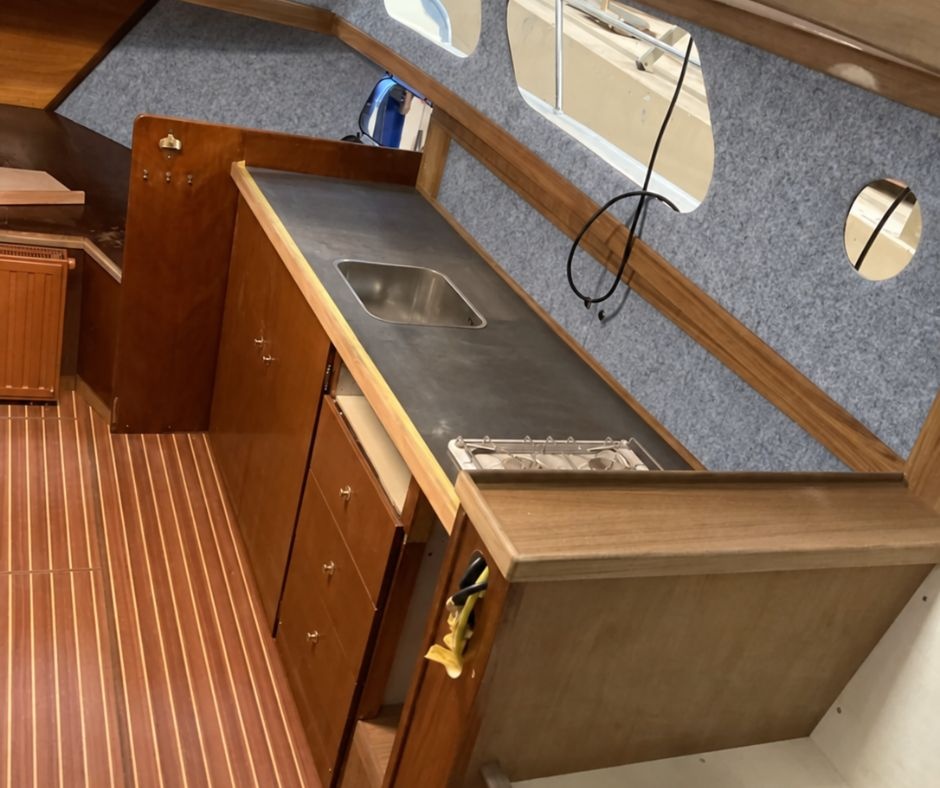
Good wall lining in a boat does more than just finish the interior. It helps the inside of your boat feel warmer and more comfortable, dampens slight reverberation and protects walls against dirt, wear and condensation.
For many boats, needle felt wall lining is a practical choice. The material is flexible, slightly sound-dampening and easy to work around curves, frames and cut-outs. This makes needle felt suitable both for re-lining an existing boat and for finishing a new cabin, berth or wheelhouse.
The best choice depends on where you fit the wall lining, the shape of the surface and the result you want. In a boat you often have to deal with moisture, temperature differences, curves and limited working space. So do not choose only on colour or looks, but also on flexibility, ease of fitting and suitability for a marine environment.
Suitable for: cabin, berth, wheelhouse, cupboard walls and other interior walls with curves.
Why choose it: flexible, slightly sound-dampening, condensation-resistant and easy to finish neatly.
Suitable for: anyone who wants to fit quickly and cleanly without loose spray adhesive.
Why choose it: handy on flat and slightly curved surfaces, provided the surface is clean, dry and free of grease.
Suitable for: places where a smooth, washable finish is desired.
Why choose it: low-maintenance, but often less flexible and less sound-dampening than needle felt.
In a boat a bare wall often feels cold and hard. Especially with metal or polyester hulls, temperature differences can cause condensation and a less comfortable indoor climate. Insulating wall lining for your boat helps to make the wall feel more pleasant and reduces direct contact with cold surfaces.
Lining also provides calmer acoustics. Hard walls reflect sound, so a small cabin quickly sounds hollow or noisy. A soft finish such as needle felt takes away part of those reflections. Do not expect full sound insulation as with heavy insulation boards, but you will notice a more comfortable space.
Needle felt is a popular material for boat wall lining because it is strong, supple and easy to work with. It conforms well to curves, corners, frames and cut-outs. This is important, because the inside of a boat rarely consists of straight walls.
Another advantage is the finish. Needle felt immediately gives the cabin or berth a warmer look and hides small irregularities better than rigid sheet materials. It can also dampen light noises and help limit condensation on cold walls.
Want to make fitting easier for yourself? Then self-adhesive needle felt for your boat is a practical option. The adhesive layer is already applied. Do make sure the surface is completely clean, dry, dust-free and free of grease before you start.
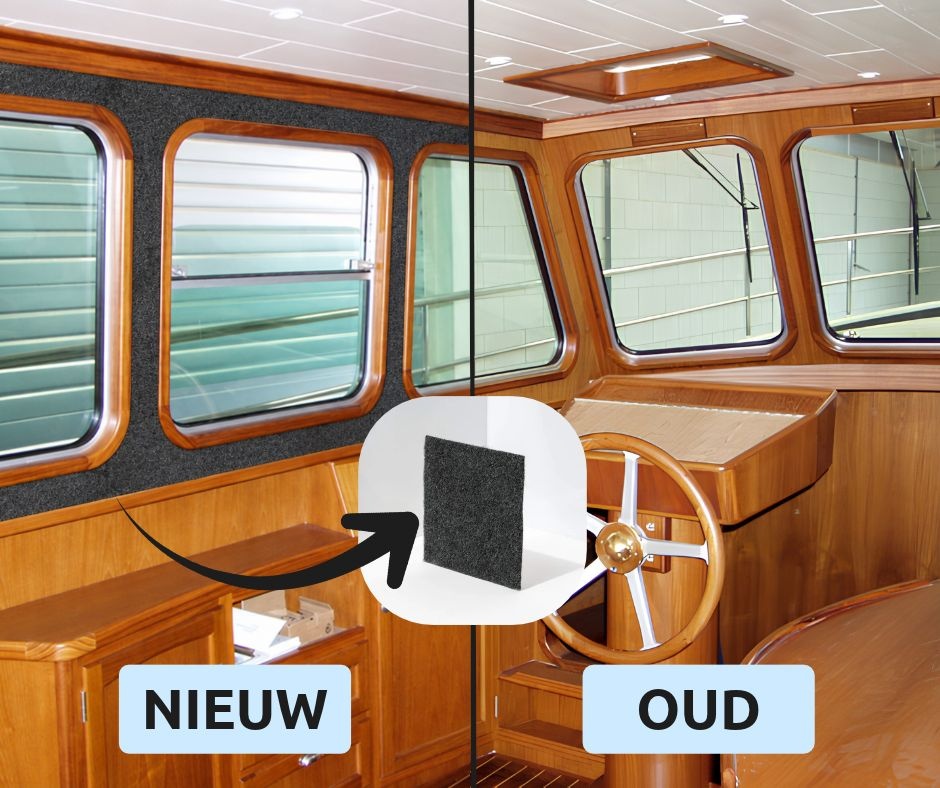
Want to re-line the inside of your boat? Then use the step-by-step guide below as a practical basis.
Old wall lining in a boat can come loose, discolour, smell musty or become damaged by moisture and use. In that case replacing is often better than repairing locally. Especially when the adhesive layer has aged or the surface is no longer clean, new lining will not stay in place as well if you leave the old layer in place.
When replacing, always check why the old lining came loose. Is it caused by condensation, a leak or poor ventilation? Solve that problem first before you fit new wall lining. That way you prevent the same problem from coming back later.
Both needle felt and vinyl can be suitable, but they have a different application. Needle felt is mainly interesting if you are looking for a warm, soft and slightly sound-dampening finish. Vinyl wall lining for a boat is handy when you want a smooth finish that is easy to clean.
When you want to line curves, are looking for a warm look and find slight acoustic damping important.
When you mainly want a smooth, washable finish on relatively flat areas.
When you want to work quickly and the surface is sufficiently clean, dry and even.
When you want more control with complex shapes, large surfaces or specific fitting requirements.
For the wall lining of your boat, needle felt wall lining is a popular solution thanks to its flexibility, slight sound dampening and condensation-resistant properties. The material is suitable for many interior spaces on board, such as the cabin, berth, wheelhouse and storage areas.
Are you using needle felt without a self-adhesive layer? Then you can fix the material with a heat-resistant spray adhesive. Always check that the adhesive suits the surface and the conditions in your boat.
At Geluidsisolatie Deal you will find materials for lining the inside of your boat, including needle felt wall lining and suitable fitting products. These materials are used for a neat finish, more comfort and better acoustics on board.
Because every boat is different, there is no single standard solution for every wall. The right choice depends on the surface, the curves, the look you want and the way the space is used.
Not sure which material is suitable for your boat? Get in touch with us. Preferably send photos of the surface, the space and the old lining. Then we can think along more specifically about the right solution.

Needle felt is a suitable choice for many boats because it is flexible, slightly sound-dampening and easy to work around curves and frames. Vinyl can be suitable when you mainly want a smooth, washable finish.
Needle felt has a slightly insulating and sound-dampening effect. It makes cold walls more pleasant to touch and reduces reverberation in the space. It is not a replacement for heavy thermal or acoustic insulation when maximum insulation is needed.
Yes, self-adhesive wall lining can be handy for boats, especially on clean, dry and grease-free surfaces. With strongly curved surfaces, old adhesive residue or awkward corners, loose adhesive can sometimes give more control.
First remove old lining and adhesive residue. Clean the surface and make it dry and free of grease. Measure the material generously, do a trial fit and then work slowly from one side to the other. Only trim edges and cut-outs neatly once the material is lying properly.
Replace wall lining when it comes loose, smells musty, is damaged or is visibly affected by moisture. Always check the cause first, such as condensation or a leak, before you fit new lining.
Vinyl wall lining can be suitable when you want a smooth, washable finish. Do bear in mind that vinyl is usually less flexible and less sound-dampening than needle felt. For curves and frames, needle felt is often easier to work with.
Measure all the surfaces you want to line and allow extra material for curves, cut-outs, seams and cutting waste. With complex shapes it is wise to order generously, so you can allow for mistakes or fitting pieces.
Find the order you'd like to withdraw
Enter your email address and order number.
Check your mailbox
If your details match an order, you'll receive an email with a link to view and manage it.