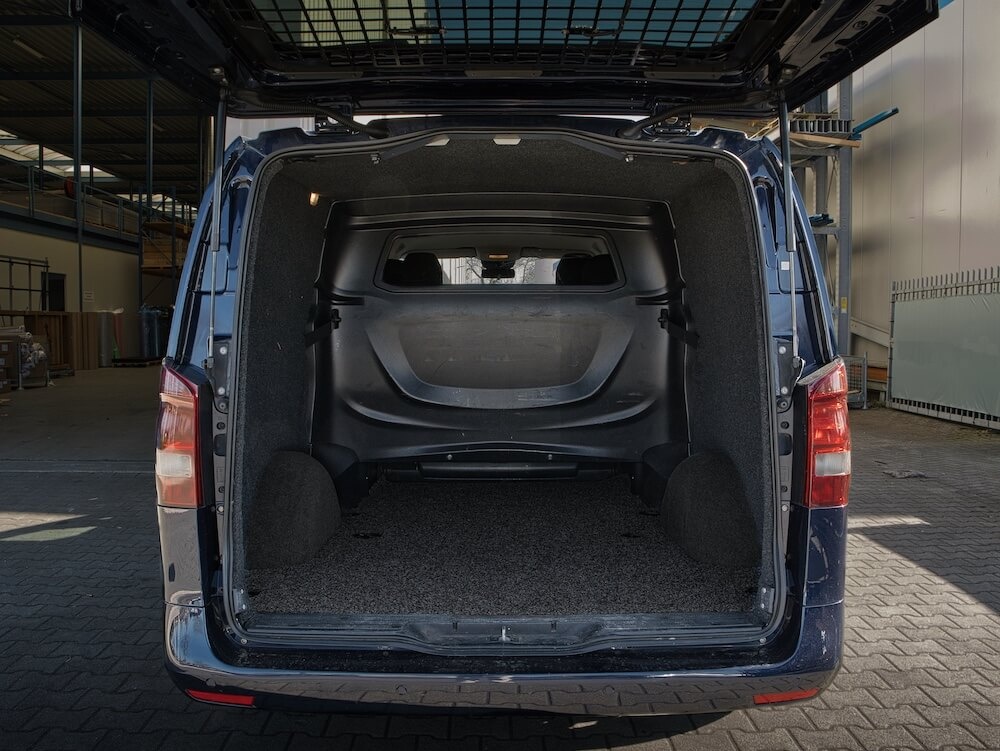
The floor of your camper is a major source of noise transmission and energy loss. Without insulation you hear the rumble of the tyres on every trip and feel vibrations from the chassis, which can cause fatigue on longer journeys. A lot of heat is also lost through an uninsulated floor. By applying good insulation and a floor covering, you significantly improve driving comfort, reduce noise nuisance and enjoy a more pleasant temperature, both in winter and in peak season. This increases not only comfort but also the energy efficiency of your camper.
Rubber mats: damping, protection and ease of use
Our rubber mats are an ideal choice for covering the cargo area or camper floor. They offer excellent sound dampening, protect against wear and create a safe, non-slip surface. These mats are easy to cut to size yourself and can be glued directly onto a wooden floor panel or metal base. They are also resistant to moisture, dirt and intensive use, making them a durable solution for long-term use in campers.
Needle felt with granulate backing: comfort, looks and noise reduction
Needle felt with granulate backing combines effective sound absorption with an attractive, homely look. The sturdy granulate backing adds extra mass, which reduces vibration and impact noise. At the same time, the soft felt top layer provides a comfortable finish that feels warm and looks good. This material is therefore often used as a visible floor in campers and is available in various colours to match your interior style perfectly. Needle felt is easy to glue down yourself and is also available as wall covering for campers, so you can create a consistent look.

Handy tips for covering your camper floor yourself
Getting started on covering your camper floor? Then we also have a few tips you can use during the process. Do you still have questions about covering your camper floor, or can't quite work it out yourself? Our specialists are ready to help you. Feel free to contact us!
- Measure accurately and make sure the fit is precise to avoid waste.
- Use quality adhesive for the best adhesion and durability.
- Finish seams and edges neatly with a suitable edge finish or profile.
- Check regularly for damp patches and treat them in good time to prevent damage to the material.