


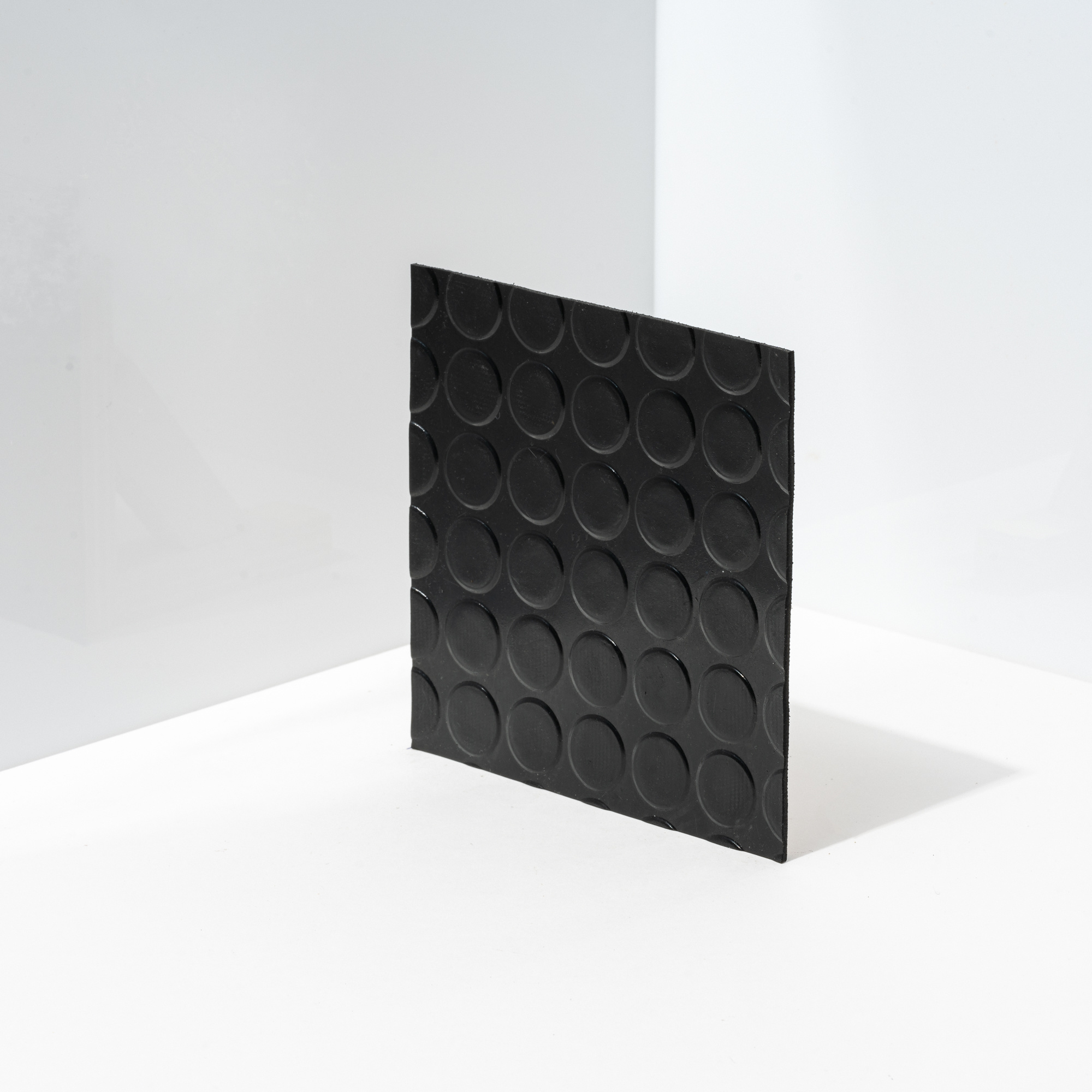

Rubber mats for protection, grip and sound damping
Rubber mats are strong, flexible mats that you use to protect floors, load areas, workplaces, vehicles or technical rooms. They provide extra grip, reduce wear on the substrate and can help to dampen impact noise and vibrations.
At Geluidsisolatie Deal you will find rubber mats on a roll that you can easily cut to size. This makes them suitable for both small areas and larger projects where you need rubber on a roll.
What is a rubber mat on a roll?
A rubber mat on a roll is a rubber surface that is supplied per roll or as a length cut to size. This makes the material practical for applications where you want to cover larger areas without using many separate mat pieces.
Rubber mats on a roll are popular because they are sturdy, hard-wearing and versatile. Depending on the type of rubber and the thickness, you can use them for protection, anti-slip, damping or as a robust finishing layer.
What do you use rubber mats for?
Rubber mats are used in places where the substrate needs extra protection, grip or damping. Think of floors and stairs in commercial buildings, garages, workshops, load areas of vans or buses, vehicle cabs, shops and building sites.
Thanks to their strong and flexible properties, rubber mats are suitable for commercial, private and industrial applications. They can be laid loose, cut to size or glued down when the situation calls for it.
Which rubber mat suits your application?
The best rubber mat depends on where you want to use it. Pay particular attention to the thickness, structure, load and method of fixing. A thinner rubber mat may be sufficient for light protection or impact noise damping, while heavier applications often call for a thicker or more hard-wearing version.
Workshop or garage
What to look for: wear resistance, grip and load capacity.
Main advantage: protects the substrate against wear and provides extra grip during intensive use.
Practical advice: choose a sturdy rubber mat with sufficient thickness for tools, vehicles or heavy loads.
Van or load area
What to look for: protection against sliding, knocks and wear.
Main advantage: helps protect the load area and prevents cargo from shifting as easily.
Practical advice: use rubber on a roll so you can line the load area neatly to size.
Floor or stairs
What to look for: anti-slip, walking comfort and sound damping.
Main advantage: improves grip and comfort in places with a lot of foot traffic.
Practical advice: pay attention to the surface structure and choose a thickness that suits the substrate.
Machine or technical room
What to look for: vibration damping, stability and load.
Main advantage: helps limit vibrations and protects the floor beneath machines or installations.
Practical advice: choose a thicker rubber mat when there is a heavy or long-term load.
Which types of rubber mats on a roll are there?
In our range you will find various types of rubber mats on a roll, each with its own properties. The differences lie in the thickness, surface structure, grip, wear resistance and level of damping, among other things.
For general applications a smooth rubber mat is often sufficient. For places where extra grip is important, a mat with a profile or texture may be more suitable. Besides standard rubber mats, we also offer special stable mats developed for use in stables.

Frequently asked questions about rubber mats
What are rubber mats used for?
Rubber mats are used to protect floors, load areas, stairs, vehicles, machines and workplaces. They provide extra grip, reduce wear and can help to dampen impact noise and vibrations.
What is the advantage of a rubber mat on a roll?
A rubber mat on a roll is handy for larger areas or custom work. You can easily unroll the rubber, mark it out and cut it to size, so the mat fits the room or substrate properly.
Are rubber mats suitable for under laminate or parquet?
In some situations rubber mats can be used as a damping underlay, but this depends on the floor build-up, thickness, compressive strength and finish. Always check that the chosen mat is suitable for the specific floor covering.
How thick should a rubber mat be?
The right thickness depends on the application. For light protection or damping, a thinner mat may be sufficient. For heavier loads, machines, vehicles or intensive use, a thicker rubber mat is usually needed.
How do I fix rubber mats in place?
On flat floors you can often lay rubber mats loose. For intensive use, vertical surfaces or places where the mat must not shift, you can glue the mat down with a suitable assembly sealant or contact adhesive.
Can I cut a rubber mat to size myself?
Yes, you can cut most rubber mats to size yourself with a sharp knife. Preferably use a straight edge and cut slowly in several passes for a neat edge.