



Sound damping with felt on the wall
An important advantage of felt wall covering is its sound-damping effect. The fibre structure of needle felt helps to absorb sound waves, so reverberation and hard reflections in a room can be reduced. You notice this especially in rooms with a lot of hard surfaces, such as plastered walls, glass, concrete, wood or plastic panels.
Felt on the wall is therefore a good choice for, for example, a home workspace, meeting room, living room, recording studio, camper or load area. The acoustics become more pleasant, while the wall immediately gets a neat, warm finish.
Applications of felt on the wall
Felt wall covering can be used in many ways. At home, it gives a calm look and better acoustics. In offices and meeting rooms, it helps to make speech sound less harsh. In studios, felt can contribute to a more controlled sound experience, especially in combination with other acoustic solutions.
Needle felt is also often used as wall covering in vehicles such as campers, vans and work vehicles. There it provides a neat finish to walls, panels and wheel arches. It also helps to damp light road noise and make the interior more comfortable.
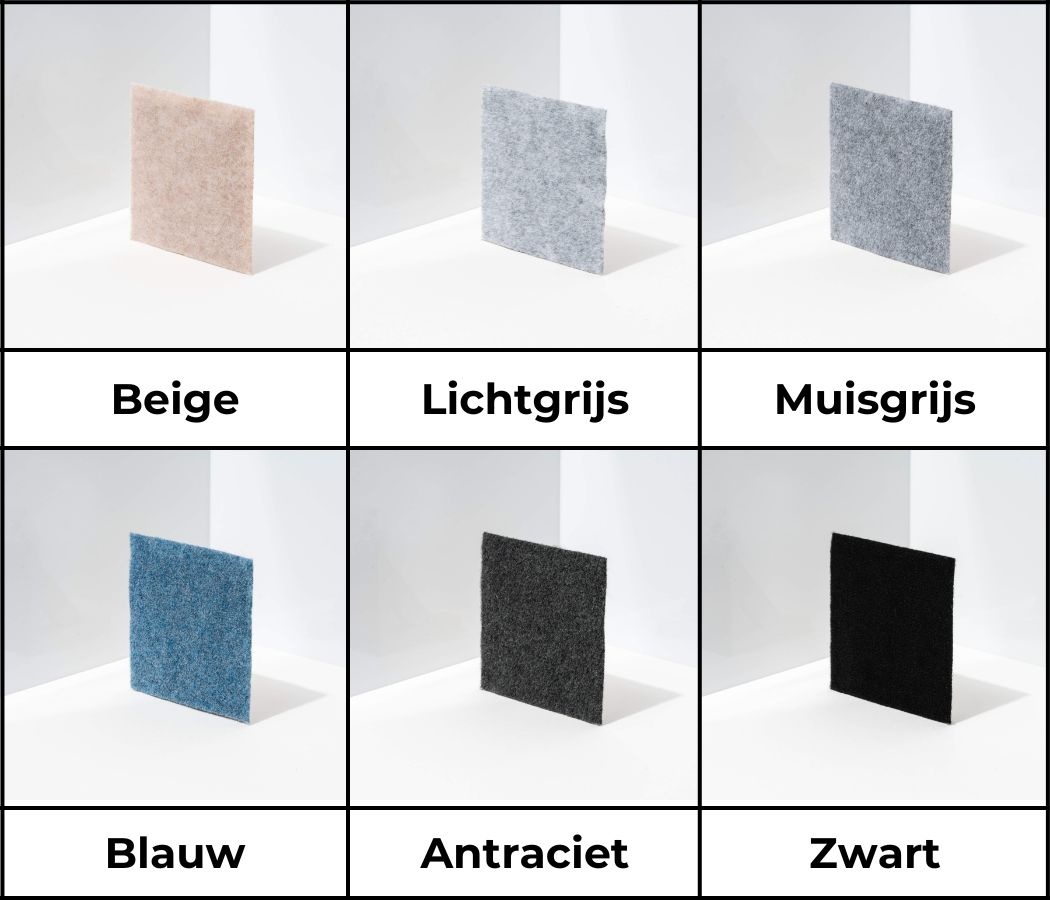
Which type of felt wall covering suits your situation?
The right choice depends on the surface and the application. Self-adhesive needle felt is handy on flat, clean and dry surfaces. Think of smooth panels, straight walls or parts where you want to work quickly and neatly.
For rough, curved or more difficult surfaces, loose needle felt with a suitable spray adhesive is often the better choice. This gives you more control when positioning and pressing down the material. This can be more practical especially with campers, work vehicles and panels with curves.
Fitting needle felt wall covering
Good preparation determines the end result to a large extent. Make sure the wall or surface is dry, clean, dust-free and grease-free before you start. Measure the surface accurately, cut the felt slightly oversize and then work steadily towards the edges.
With self-adhesive felt, remove the protective film step by step while pressing the material down firmly. With loose felt, use a suitable spray adhesive and follow the adhesive instructions. Preferably work in sections, so you can place the felt tightly without creases or air bubbles.
Why choose Geluidsisolatie Deal?
At Geluidsisolatie Deal you will find various types of needle felt for wall covering, vehicle lining and acoustic finishing. You can choose from several colours and versions, including needle felt with stretch and a self-adhesive back, but at Geluidsisolatie you can also opt for self-adhesive premium needle felt. This felt is extra thick, which gives a more luxurious finish, and has a higher pile weight, so it offers better sound absorption.
The range is suitable for anyone who wants to apply felt to a wall, wall panel or as floor covering in a vehicle and is looking for a neat finish. Not sure which type of felt suits your application? Then get in touch for advice, so you avoid choosing a material that does not suit the surface well.
Order your felt wall covering
Do you want to finish your wall, partition or vehicle neatly and improve the acoustics at the same time? Then choose the felt wall covering that suits your application. Go for self-adhesive needle felt on flat surfaces or choose loose felt with spray adhesive for curved and more difficult surfaces.
Browse the range from Geluidsisolatie Deal and easily order the colour and version that suits your project.
Frequently asked questions about needle felt as wall covering
Why is needle felt a good covering material for a wall?
Needle felt is flexible, sound-damping and easy to finish neatly. It is suitable for flat walls, panels and vehicle interiors. That means you can use it for both a sleek look and better acoustics.
Is needle felt suitable for damp spaces or vehicles?
Needle felt can be used in vehicles such as campers, boats and load areas, as long as the surface is dry, clean and grease-free when fitting. In permanently damp spaces, good ventilation is important and you need to check that the surface is suitable.
How do I fix needle felt wall covering?
First make the surface dry, dust-free and grease-free. Self-adhesive needle felt is applied directly to flat surfaces. Loose needle felt is fixed with a suitable spray adhesive, especially on rough, curved or more difficult surfaces.
Can I use self-adhesive needle felt on any wall?
No, self-adhesive needle felt works best on flat, smooth, clean and dry surfaces. On rough walls, strongly curved shapes or textured surfaces, loose felt with spray adhesive is usually more suitable.
Does felt noticeably improve wall acoustics?
Yes, felt on the wall can reduce reverberation and light reflections. The effect is most noticeable in rooms with hard surfaces. For heavy sound insulation, an additional build-up with insulation material is usually needed.
How do I maintain felt wall covering?
You can usually remove dust and light dirt with a vacuum cleaner with a soft brush or with a dry, soft cloth. Do not use aggressive cleaning products and always test cleaning on an inconspicuous spot first.