


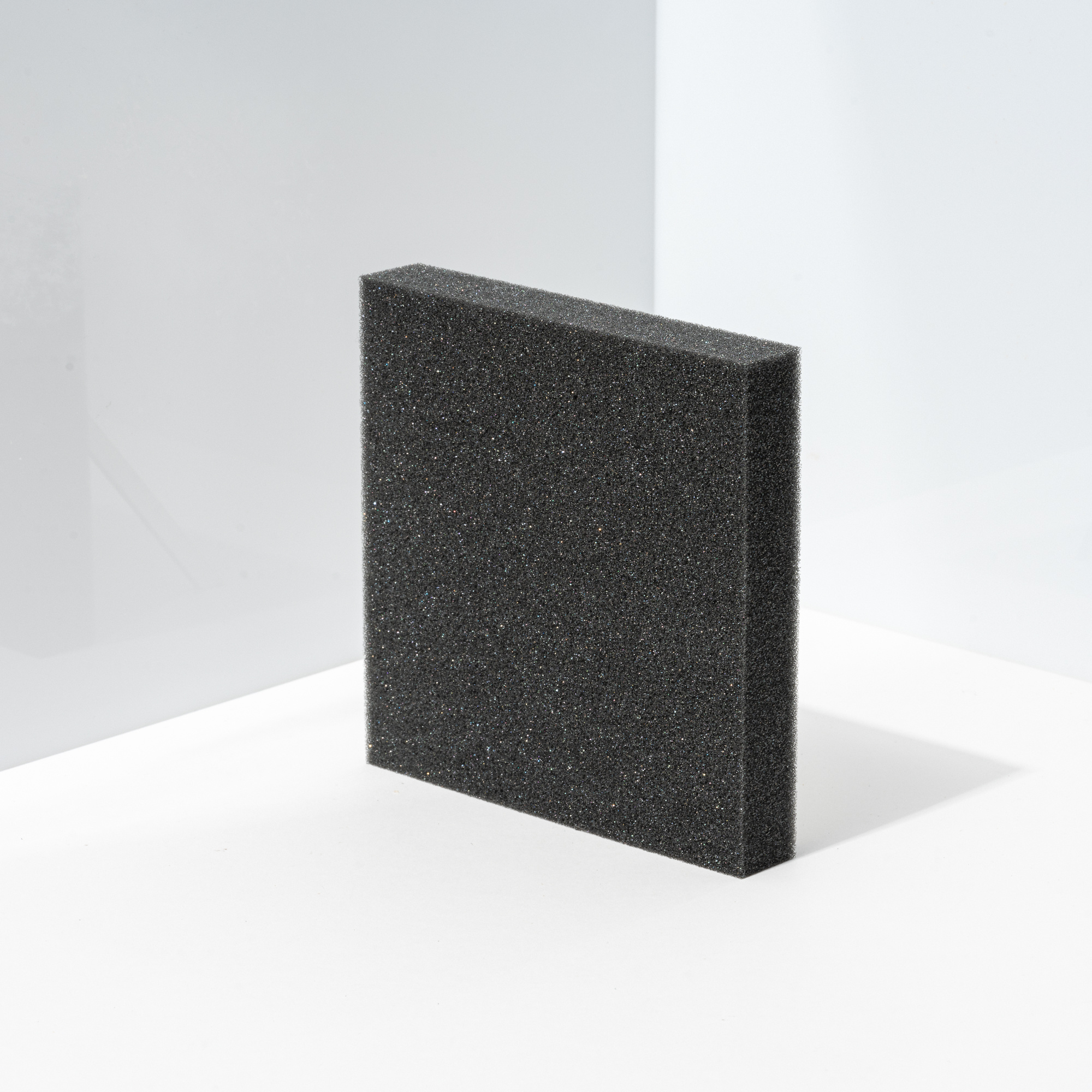
Polyurethane foam for acoustics and sound absorption
Polyurethane foam is a lightweight, open-cell foam material that is often used to reduce reverberation, echo and disturbing reflections in a room. It is used as acoustic foam on walls, ceilings or other hard surfaces where sound is strongly reflected.
Looking for polyurethane foam to make sound in the same room calmer and more intelligible? Then this material is often a practical solution. If you want to block sound between two rooms, polyurethane foam alone is usually not enough and heavier sound insulation materials are needed.
What is polyurethane foam?
Polyurethane foam, often abbreviated to PU foam, is a foam with an open-cell structure. This open structure consists of many small air pockets that sound waves can penetrate. Part of the sound energy is attenuated in the foam, so less sound is reflected off walls, ceilings or other hard surfaces.
As a result, polyurethane foam mainly helps to improve the acoustics within a room. The material is used in music studios, podcast studios, home cinemas, offices, meeting rooms, workshops and technical spaces, among other places.
Improving acoustics with polyurethane foam
Polyurethane foam is particularly suitable for absorbing mid and high frequencies. These are often the frequencies that cause a harsh, shrill or restless sound in a room. By placing the foam in strategic locations, echoes and reverberation are reduced and speech, music or recordings sound clearer.
The effect is especially noticeable in rooms with many hard materials, such as concrete, glass, tiles, plaster or large empty walls. These surfaces reflect sound strongly. Polyurethane foam sheets help to limit those reflections and make the sound picture calmer.
Polyurethane foam insulation: absorption or sound insulation?
The term polyurethane foam insulation is often used, but it is important to distinguish between sound absorption and sound insulation.
- Sound absorption: reduces reverberation, echo and reflections within the same room.
- Sound insulation: limits sound transmission from one room to another.
Polyurethane foam is mainly intended for sound absorption. It makes a room acoustically calmer, but does not block sound completely. To stop sound reaching neighbours, upper floors or adjacent rooms, materials with more mass are usually needed, such as heavy insulation boards, decoupling materials or composite sound insulation systems.
Are you mainly troubled by impact noise, vibration or heavier sound transmission? Then an alternative material such as bonded foam may be a better fit in some situations. Always check which material suits the type of noise you want to reduce.
When do you choose polyurethane foam sheets?
Polyurethane foam sheets are suitable when you want to acoustically treat specific parts of a wall, ceiling or workstation. They are light, easy to cut to size and relatively easy to fix. This makes them handy for both private and business applications.
A polyurethane foam sheet can be used, for example, behind a desk, around a recording corner, in a studio, near a machine setup or on a wall where a lot of sound is reflected. The right result depends on the dimensions of the room, the type of sound and the amount of hard surfaces.
In which rooms do you use polyurethane foam?
Polyurethane foam is used in rooms where intelligibility, calm or sound control is important.
- Music studios and podcast studios: for fewer reflections and cleaner recordings.
- Home cinemas: for a calmer, more controlled sound picture.
- Offices and meeting rooms: for better speech intelligibility and less reverberation.
- Home workspaces: for more pleasant acoustics during calls or video meetings.
- Workshops and technical spaces: for dampening annoying reflections from machines or equipment.
Please note: for machines or installations with a lot of low-frequency noise, additional or different material may be needed. Polyurethane foam generally works better on mid and high tones than on heavy low-frequency hum.
Different forms of polyurethane foam
Polyurethane foam is available in different shapes and structures. The shape partly determines how the material absorbs sound, what it looks like and where it can best be used.
A commonly used variant is egg crate foam. This foam has a surface with studs that increase the absorbing surface area and help to reduce reflections.
There are also versions with a pyramid profile, wave profile or flat finish. Profiled foam is often chosen for studios and technical applications, while flat polyurethane foam sheets can be practical when a sleeker finish is desired. Also take a look at the parent category acoustic foam if you want to compare different types of foam.
What should you look out for when buying polyurethane foam?
If you want to buy polyurethane foam, do not just look at the price or size. The best product depends on your room, your noise problem and the finish you want.
- Thickness: thicker foam generally absorbs better, especially at lower mid frequencies.
- Surface structure: studs, pyramids and waves increase the absorbing surface area.
- Placement: place the foam where sound is strongly reflected, such as opposite speakers or around a recording spot.
- Fire safety: check whether the chosen product meets the requirements of the room.
- Fitting: choose a fixing method that suits the surface, such as mounting adhesive, contact adhesive or a self-adhesive version.
What thickness of polyurethane foam do you need?
The right thickness depends on the room and the type of sound you want to reduce. For slight reverberation problems in a small room, thinner foam may be sufficient. For studios, workshops or rooms with many hard surfaces, thicker foam or a larger treated surface is often needed.
As a guideline: first treat the most important reflection points in the room. Think of the wall opposite the speakers, the wall behind a desk, side walls near a recording spot or parts of the ceiling. It is usually more effective to treat several reflection points in a targeted way than to place one small sheet at random.
Buy polyurethane foam from Geluidsisolatie Deal
At Geluidsisolatie Deal you will find various types of acoustic foam, including polyurethane foam sheets and egg crate foam. This lets you choose a solution that suits your room, application and noise problem.
Not sure which type of polyurethane foam is right for your situation? Get in touch with us for personal advice. Describe your room, the noise problem and where you want to place the foam, and we can think along with you more specifically.
Ask for advice on polyurethane foam
Frequently asked questions about polyurethane foam
What is polyurethane foam?
Polyurethane foam is an open-cell foam material that absorbs sound waves. It is often used as acoustic foam to reduce reverberation, echo and reflections in a room.
Does polyurethane foam also reduce sound to other rooms?
Polyurethane foam mainly helps to absorb sound within the same room. It is less suitable for completely blocking sound to other rooms. Heavier sound insulation materials are usually needed for that.
Where do you place polyurethane foam for the best result?
Place polyurethane foam on hard surfaces where sound is strongly reflected, such as walls and ceilings. Think especially of reflection points opposite speakers, around a recording spot or in rooms with a lot of concrete, glass or tiles.
How do you fix polyurethane foam sheets?
Polyurethane foam sheets can often be fixed with mounting adhesive, contact adhesive or a self-adhesive layer. Which method is suitable depends on the surface and whether you want to be able to remove the foam later.
What thickness of polyurethane foam do I need?
The right thickness depends on the noise problem, the room and the desired result. Thicker polyurethane foam generally absorbs more sound than thinner foam, but placement and the total treated surface area are also important.
Is one polyurethane foam sheet enough?
That depends on the size of the room and the amount of reverberation. One polyurethane foam sheet can make a local difference, but a noticeable acoustic improvement often requires several sheets in the right places.