


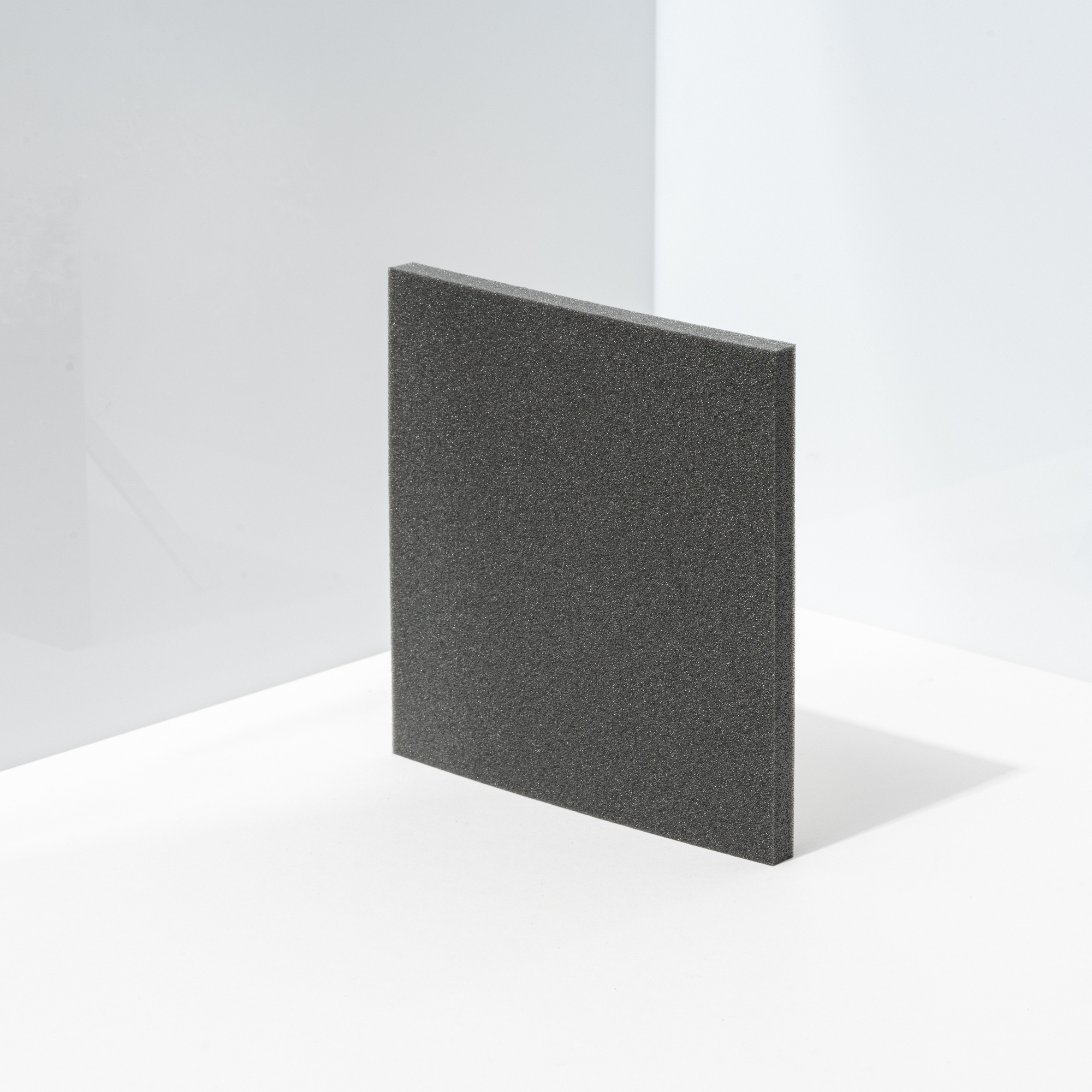
Polyethylene foam (PE foam)
Polyethylene foam, often shortened to PE foam, is a light, flexible, closed-cell foam material that belongs to the family of acoustic foam. It is used for insulation, protection, sealing and for damping vibrations or impact noise. Thanks to the closed-cell structure, the material hardly absorbs any moisture and keeps its shape well in everyday use.
At Geluidsisolatie Deal you will find polyethylene foam in various forms, such as PE foam sheets, rolls and custom solutions. Which version is suitable depends on the application, the thickness you want, the load and the environment in which the material is used.
What is polyethylene foam?
Polyethylene foam is a plastic foam based on polyethylene. The material consists of tiny closed air cells. This structure makes the foam light in weight, yet strong, resilient and moisture-resistant.
Because the cells are closed, moisture does not easily penetrate the material. That is why polyethylene foam is often chosen for applications where insulation, protection and durability are important. Think of building applications, packaging, transport, technical installations and industrial sound insulation.
What do you use PE foam for?
PE foam is suitable for situations where material has to protect, insulate or dampen. The most common applications are:
- Thermal insulation: for example in floors, walls, pipes or plant rooms.
- Product protection: for example as a protective layer in packaging or during transport.
- Vibration damping: for example under machines, appliances or structural parts.
- Noise reduction: mainly for limiting impact noise and light vibrations.
- Sealing and filling: for example as an intermediate layer, underlay or spacer material.
For sound insulation, PE foam is mainly used as a supporting material against vibrations and impact noise. For airborne noise, such as voices or music, a combination with other sound-insulating materials is often needed.
Benefits of polyethylene foam
Polyethylene foam is widely used because it combines several practical properties. The material is easy to work with and can be cut, fitted or used as a sheet, roll or cut-to-size piece.
- Light in weight and therefore easy to handle.
- Closed-cell and therefore highly resistant to moisture.
- Flexible and resilient under pressure.
- Suitable for protection against knocks and scratches.
- Can be used as an insulating, damping or filling layer.
- Available in different thicknesses, densities and versions.
The exact performance depends on the thickness, density and application you choose. For heavier loads or better damping, a sturdier or thicker version is usually needed.
PE foam sheet, PE foam roll or custom work?
Polyethylene foam is available in different forms. The right choice depends on how you want to use the material.
PE foam sheet
Suitable for: insulation, protection, filling and damping.
When to choose it? When you need fixed dimensions or want to cut the material to size yourself.
PE foam sheets
Suitable for: larger surfaces, technical applications and packaging.
When to choose it? When you want to line several parts or a larger surface.
PE foam on a roll
Suitable for: underlays, protective layers and long strips.
When to choose it? When you want to work through longer lengths quickly or need a continuous layer.
Custom PE foam
Suitable for: specific shapes, cut-outs or technical components.
When to choose it? When standard sheets or rolls do not fit your application well.
Polyethylene foam as insulation
Polyethylene foam insulation is used to limit heat loss, separate surfaces or reduce impact noise. Thanks to the closed-cell structure, the material is suitable for applications where moisture resistance is important.
In construction, PE foam is used, for example, as an underlay, edge strip, pipe insulation or protective layer between structural parts. In technical installations the material can help to absorb vibrations and light mechanical loads.
Please note: the insulating effect depends on the thickness, density and build-up of the construction. For the best solution it is important to match the material to the situation.
PE foam for protection and packaging
A polyethylene foam sheet is often used to protect products against knocks, scratches and pressure points. The material absorbs shocks and forms a soft, resilient intermediate layer.
That is why PE foam is widely used in the packaging industry and the transport sector. Fragile products can be protected with loose sheets, inlays, strips or shapes cut to size.
What should you look for when choosing polyethylene foam?
Not every type of PE foam is suitable for every application. Pay particular attention to the following points:
- Thickness: partly determines how much protection, insulation or damping the material offers.
- Density: sturdier foam is often better suited to higher loads.
- Format: choose between sheets, rolls or custom work depending on how you will use it.
- Environment: in damp spaces, closed-cell foam is often a logical choice.
- Load: with machines, heavy products or structural parts, compression resistance is important.
- Purpose: insulating, protecting and damping sometimes call for a different version.
Not sure whether to go for a PE foam sheet, PE foam on a roll or another version? Then it is wise to decide in advance which load, thickness and finish are needed.
Buy polyethylene foam from Geluidsisolatie Deal
Do you want to buy polyethylene foam for insulation, protection or vibration damping? At Geluidsisolatie Deal you will find PE foam in various versions, including PE foam sheets and PE foam on a roll.
We are happy to help you choose the right material for your application. Tell us what you want to use the foam for, what dimensions you need and whether the material mainly has to insulate, protect or dampen. Then we can give more targeted advice.
Need advice? Contact us for help choosing the right polyethylene foam sheet, roll or custom solution.
Frequently asked questions about polyethylene foam and PE foam
What is polyethylene foam?
Polyethylene foam is a closed-cell foam material based on polyethylene. It is light, flexible and moisture-resistant, and is used for insulation, protection, sealing and vibration damping.
Is PE foam suitable as an insulation material?
Yes, PE foam can be used as an insulating layer. The material helps to limit heat loss and, thanks to the closed-cell structure, is highly resistant to moisture. The insulating effect depends on the thickness, density and application.
When do you choose a PE foam sheet?
A PE foam sheet is suitable when you need a fixed size for insulation, protection, filling or damping. Sheets are handy for flat surfaces and can often be cut to size.
When do you use PE foam on a roll?
PE foam on a roll is handy for larger surfaces, long strips or continuous protective layers. It is often used as an underlay, intermediate layer or protective material during transport and installation.
What are the benefits of PE foam?
PE foam is light, flexible, moisture-resistant and resilient. It protects against knocks and scratches, can dampen vibrations and is available in different thicknesses, densities and versions.
Does polyethylene foam resist moisture?
Yes, polyethylene foam has a closed-cell structure, so it hardly absorbs any moisture. That is why it is often used in situations where moisture resistance is important.