
In a studio the sound has to be perfect. If a studio has poor acoustics, this can harm the quality of the sound and therefore the final music production. The right sound insulation materials in your studio are therefore extremely important. That is why Geluidsisolatie Deal gives you the tips you need to choose the right studio sound insulation. But first, what happens with the wrong sound insulation?

The consequences of the wrong studio insulation
With the wrong studio insulation, or with no sound insulation in the music studio at all, the following problems can arise:
1. Sound leakage
Poor sound insulation can lead to leakage, where sound from outside the studio gets into your recordings. This puts unwanted background noise on the recordings, which can make them almost unusable.
2. Acoustic reflection
With the wrong sound insulation in the studio, or with too little of it, acoustic reflections can occur. This means sound waves bounce between the walls, ceilings and floors, causing reverberation. Reverberation makes recordings unclear, which can also make your recordings unusable.
So good studio insulation matters a great deal. But which materials are suitable for studio sound insulation, and how do these sound insulation materials work?
Improving studio acoustics with acoustic foam
Using acoustic foam in a music studio gives you several benefits, such as:
1. Sound absorption & better acoustics
Acoustic foam is designed to absorb and reduce sound waves. The surface with the studs or points of, for example, pyramid foam offers more surface area than flat foam, so more sound is absorbed and therefore not reflected. This reduces reverberation and echo, which improves the recording quality and the overall sound quality.
2. Sound stays in your studio
Sound control: Acoustic panels can also help to insulate sound and stop it spreading to adjoining rooms. This can be especially useful in an apartment block or a busy area where it is important to keep noise to a minimum.
Use insulation sheets
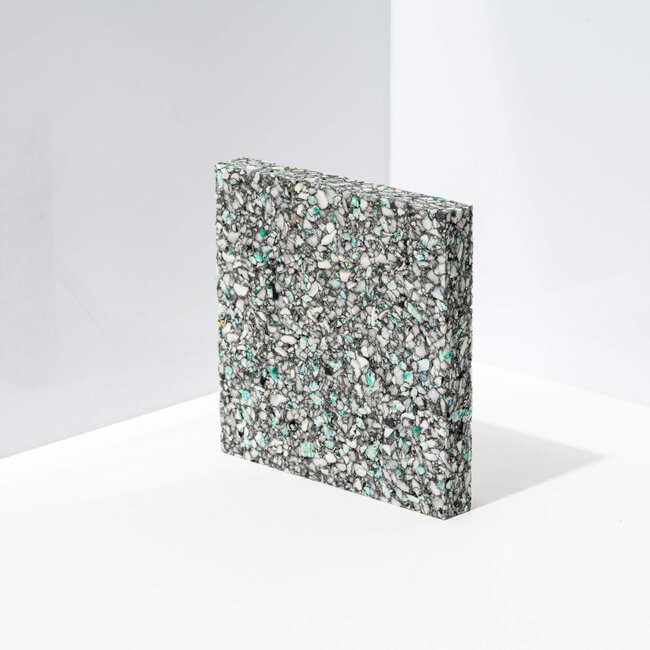
To achieve the perfect sound, you first need to use insulation materials that add mass to the surrounding walls and floors, so that vibrations are absorbed better. By insulating the walls and floors of your studio with bonded foam, you can be sure of better sound straight away. This compressed polyurethane foam has a density of up to 160 kilograms per cubic metre, so sound from outside no longer gets into your studio so easily, and vice versa.
Egg crate foam range
In our range you will find different types of egg crate foam, which vary, for example, in thickness or type of pattern. Depending on the thickness, it can absorb different frequencies. There is no difference in how the various patterns of the sound-absorbing panels work; it is more the look that sets the different types apart. These types of egg crate foam are also often called studio foam. Our egg crate foam range consists of:
Egg crate foam, standard
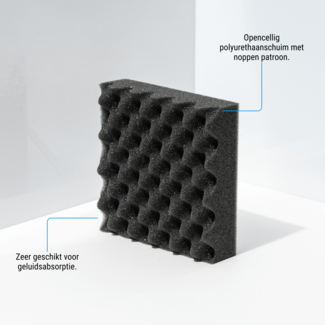
Egg crate foam, 50 mm thick

Pyramid foam

Self-adhesive egg crate foam, standard

Self-adhesive pyramid foam
