
Insulate your car doors against noise? Learn how to damp doors, reduce road noise, and improve speaker quality with self-adhesive anti-vibration sheets.
A large part of the road noise, wind noise and vibration noise in a car, work vehicle, van or camper comes in through the doors. Car doors are made of relatively thin sheet metal that quickly starts to vibrate along because of wind, the road surface and speakers. By insulating a car door against noise, you reduce this sounding-box effect and make the vehicle noticeably quieter while driving.
Car door insulation is especially worthwhile when you hear a lot of wind noise at higher speeds, when doors sound hollow or tinny, or when the speakers in the door start to rattle on low notes. By damping the door from the inside, you improve not only driving comfort, but often also the sound quality of the car audio.
On this page you can read when insulating a car door makes sense, which material you use and how to damp the doors of a car, van or camper yourself.
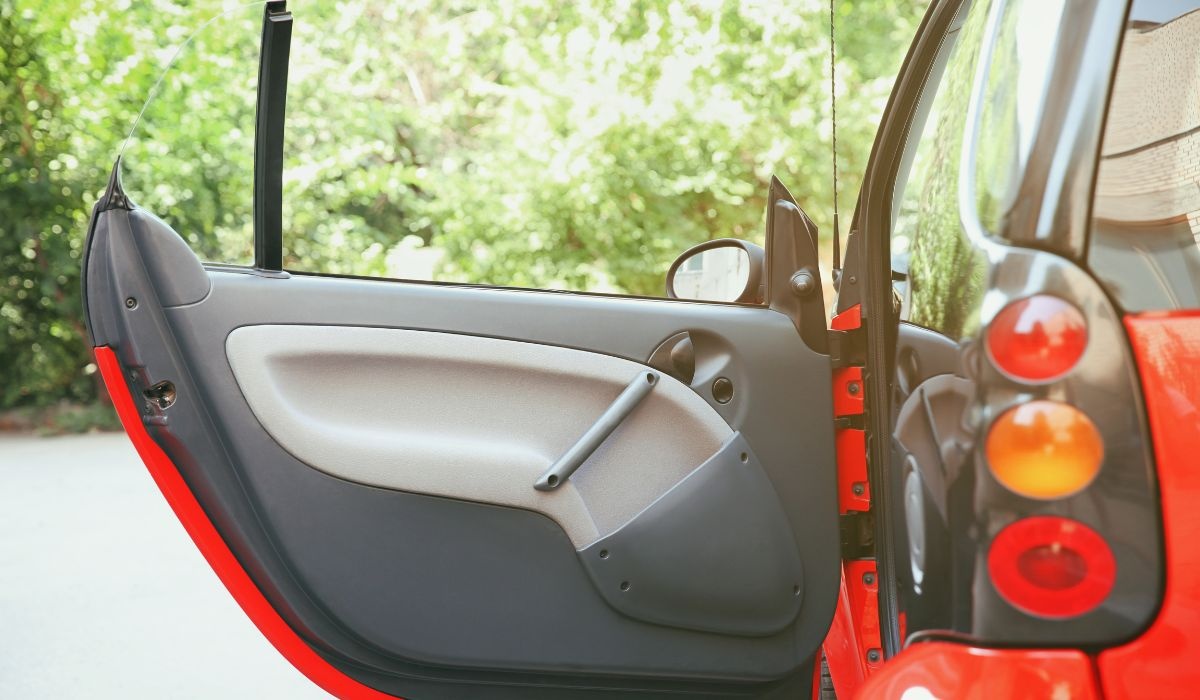
With car door insulation, it is mainly about reducing vibration in the metal sheet metal. You do that with self-adhesive vibration damping sheets or damping mats with enough mass. You stick these to the inside of the outer panel and on easily accessible parts of the metal door frame.
The aim is not to make the door completely soundproof, but to slow down the vibration of the sheet metal. That reduces the hollow sound, less noise comes in through the door and speakers in the door get a more stable base.
Problem: wind and vibration are passed on to the cabin via the thin sheet metal of the door.
Best approach: vibration damping sheets on the inside of the outer panel and the door frame.
Problem: the door sounds thin and hollow when you close it or when the sheet metal vibrates along.
Best approach: damp large flat parts of the door, so the metal acts less like a sounding box.
Problem: low notes make the sheet metal and door panel vibrate along.
Best approach: extra attention to the area around the speaker and the metal frame.
Problem: vibrating sheet metal causes booming bass notes and less tight sound reproduction.
Best approach: first damp the door, then check that the door panel has been refitted firmly.
The reason for insulating a car door differs per vehicle. With a passenger car, it is often about less wind noise and better car audio. With a van, the hollow load area plays a part. With campers, finishing is also important in addition to driving comfort.
In a car, door insulation is usually about reducing road noise, wind noise and vibration from the side of the vehicle. Especially at higher speeds, with coarse tyres or loud music, an uninsulated door can be clearly audible.
The practical approach is to damp the car door from the inside with self-adhesive vibration damping sheets. In doing so, you mainly treat the inside of the outer panel, the door frame and, where possible, the areas around the speakers.
In a work vehicle or van, doors can transmit extra noise, especially when the cab or load area has little other lining. Large bare metal surfaces amplify sound more quickly, so road noise and resonance are more prominent.
Start by damping the doors and combine this where needed with load area, floor and wall insulation. That way you avoid only the door becoming quieter while other bare metal parts still transmit a lot of noise.
In a camper, comfort on longer journeys also matters in addition to road noise. Doors can transmit wind noise and vibration to the cab, while speakers in the doors can make the sheet metal resonate even more.
The best approach is usually to first damp the metal sheet metal of the doors. After that, you can look at additional finishing or lining where needed, as long as moving parts, cables and drainage openings stay free.
Project cars and classics often have little factory insulation. Thin sheet metal, simple door panels and older fixing materials can make doors sound hollow or rattle more quickly.
So where needed, combine car door insulation with insulation of the floor, wheel arches, boot and bulkhead. That way you tackle several routes by which road noise enters the interior.

Which solution suits best depends on the type of noise you want to reduce. Use the selection guide below as a starting point.
Suitable solution: self-adhesive vibration damping sheets on the inside of the outer panel and the frame
Why? The mass slows the vibration of the sheet metal and reduces the sounding-box effect of the door.
Suitable solution: damping on large, flat metal parts of the door
Why? Large sheet areas resonate fastest. By damping these, the door sounds less tinny and more solid.
Suitable solution: extra damping around the speaker position and on the metal door frame
Why? A more stable door gives speakers a better base, so bass notes can sound tighter and fuller.
Suitable solution: first damp the metal, then check that the door panel is firmly attached
Why? Rattles often come from a combination of vibrating sheet metal, loose clips and moving plastic parts.
Besides the metal sheet metal, the door panel also plays a role. A plastic door panel can start to vibrate when it is not fixed properly or when the speaker produces a lot of low notes. Even so, good car door insulation usually starts with the metal, because that is where the biggest sounding-box effect arises.
After fitting the damping mats, check that the door panel fits well, that all clips are secure and that the speaker is free of obstructions. That way you prevent a well-damped door from still producing side noises because of loose parts.
You usually do not need to cover a door completely to notice an effect. With damping, it is about adding enough mass to the parts that vibrate. As a guideline, we advise covering at least roughly 70% of the relevant sheet surface of doors and side panels with damping.
Work mainly on the large, flat and easily accessible parts of the outer panel and the frame. Pay extra attention to the area around the speaker. Press the material down firmly, especially on edges and curved parts. Poorly pressed edges or air bubbles can mean the material works less well or comes loose over time.
A recognisable situation is a car with speakers fitted in the doors. While driving, you hear wind noise along the doors and with bass-heavy music the door panel starts to rattle. When you tap the door, the sheet metal sounds hollow and thin.
In such a case, treating only the door panel is often not enough. The best order is usually: first damp the inside of the outer panel with a self-adhesive bitumen vibration damping sheet, then damp the door frame and speaker area, and then check that the door panel has been refitted firmly. That way you tackle the vibration first and the finish afterwards.
Doors are an important route by which sound enters the vehicle, but not the only one. For the best result, look at the total noise source: does the noise come from the tyres, the engine, the floor, the load area or the doors?
Do you mainly hear wind noise or resonance at the side of the car? Then doors are a logical place to start. If you mainly hear tyre noise from below or from the rear, wheel arches and floor are usually more important.
Car door insulation works best when the material bonds well and is applied in the right place. In practice, things often go wrong in the preparation, the installation or by blocking moving parts.

Yes, car door insulation mainly helps against resonance, vibrating sheet metal, wind noise and side noises from the door. It does not make the car completely silent, but it can make the noise in the cabin noticeably calmer.
These terms are often used interchangeably. Damping a car door is mainly about reducing vibration in the sheet metal. That is an important part of insulating a car door against noise.
For the best result, treat both the inside of the outer panel and the metal door frame. The outer panel is often the largest resonating surface, while the frame influences the door panel and the speaker area.
Yes, often it does. Because the door vibrates less, bass notes usually sound fuller and tighter. Rattling side noises with louder music also often decrease.
As a guideline, you can assume at least roughly 70% coverage of the relevant sheet surface. The exact amount depends on the size of the door, the vehicle type and how many zones you want to treat.
Yes, with self-adhesive vibration damping sheets, a sharp knife, degreaser and possibly a pressure roller, this is usually quite doable yourself. Work carefully around cables, window guides, lock mechanisms and drainage openings.
Usually not. You achieve the most effect by damping the metal sheet metal of the door. Treating only the door panel helps less against resonance of the outer panel.
Find the order you'd like to withdraw
Enter your email address and order number.
Check your mailbox
If your details match an order, you'll receive an email with a link to view and manage it.