


Acoustic foam for better acoustics
You use acoustic foam to reduce reverberation, echo and annoying reflections in a room. The foam absorbs part of the sound waves, so speech, music or ambient noise sounds calmer and clearer.
Important to know: acoustic foam is mainly intended for sound absorption within a room. It is not the same as full sound insulation. If you want to block noise from neighbours, traffic or other rooms, you will usually need heavier insulation materials or structural solutions.
What is acoustic foam?
Acoustic foam is a sound-absorbing foam material, often made from polyether or a similar type of foam. Thanks to the open structure and the profile of the foam, sound waves are reflected less strongly off walls, ceilings or other hard surfaces.
This means acoustic foam mainly helps with problems such as reverberation, long decay times, flutter echoes and an unsettled sound in the room. You will often see this material in music studios, podcast rooms, offices, home workspaces, rehearsal rooms and technical environments.
Improving acoustics with acoustic foam
With acoustic foam you improve the acoustics of a room by reducing reflections. Mid and higher frequencies in particular are absorbed better, which makes speech easier to understand and music sound less harsh or muddy.
In a music studio, home studio or podcast setup, the right sound foam can help make recordings cleaner. In an office or meeting room, acoustic foam contributes to more calm, less reverberation and better concentration.
Acoustic foam or sound insulation foam?
The terms acoustic foam, sound insulation foam, soundproofing foam and noise foam are often used interchangeably. Even so, there is an important difference.
- Acoustic foam mainly improves the sound in the room itself by absorbing sound.
- Sound insulation is intended to reduce sound transmission between rooms, for example through walls, floors or ceilings.
- Foam sound insulation can be part of a solution, but usually only works well in combination with mass, decoupling and the right construction.
Mainly looking for less reverberation or echo? Then acoustic foam is often a logical choice. Do you want to reduce noise from neighbours, traffic noise or impact noise? Then additional advice is important.
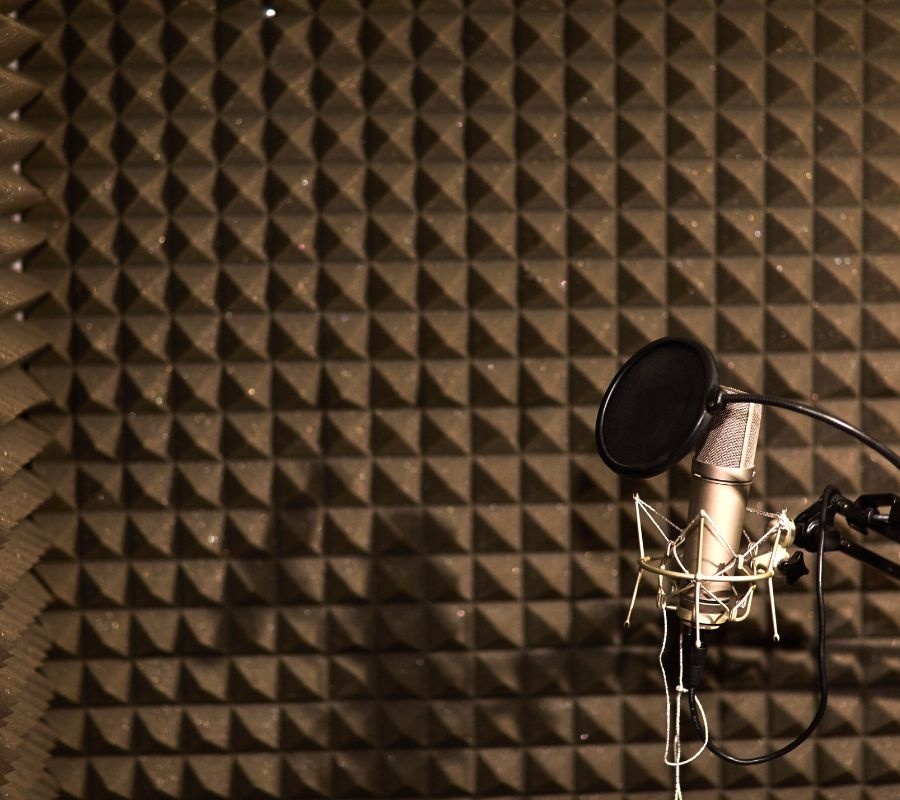
Which type of acoustic foam do you need?
The right acoustic foam depends on your room, the type of noise and the purpose of the application. Below you will find a practical selection guide.
Studio, podcast room or home cinema
Suitable foam: egg crate foam or profiled foam
Why? Helps reduce reverberation, echo and reflections, so speech and music sound clearer.
Vibrations or impact noise
Suitable foam: bonded foam
Why? Can help with damping and decoupling, depending on the construction and application.
Machine room, engine bay or damp environment
Suitable foam: moisture and oil-resistant foam
Why? Better suited when moisture, oil, dirt or technical conditions play a role.
Neighbour noise or noise from outside
Suitable foam: not acoustic foam alone
Why? This usually calls for a heavier sound-insulating build-up, such as an acoustic stud wall or a floor solution.
Acoustic foam in the mass-spring-mass principle
With the mass-spring-mass principle, sound is reduced by a combination of mass, decoupling and a resilient intermediate layer. In some constructions, foam can be used as a resilient or damping layer.
Whether acoustic foam is suitable for this depends on the build-up, the type of noise and the load. For real sound insulation, foam alone is usually not enough. Read more about the mass-spring-mass principle or ask for advice on your situation.
Types of acoustic foam
There are various types of acoustic foam and sound foam. Each type has its own application.
Egg crate foam
Egg crate foam is often used on walls and ceilings in studios, practice rooms and other spaces where reverberation and reflections need to be reduced. The egg crate structure increases the absorbing surface.
Bonded foam
Bonded foam is compressed foam that is often used for damping and for reducing vibrations or impact noise. That is why bonded foam is also regularly used for vibration isolation.
Moisture and oil-resistant foam
Moisture and oil-resistant foam is intended for situations where the material may come into contact with moisture, oil or dirt. Think of engine bays, technical installations or machinery environments.
How do you choose the right acoustic foam?
Start with the problem you want to solve. If it is about reverberation within the same room, you mainly look at sound absorption. If it is about noise coming through walls, floors or ceilings, you will probably need a broader sound insulation solution.
- Identify the noise problem: reverberation, echo, impact noise, vibrations or sound transmission.
- Look at the room: dry, damp, technical, small, large or heavily used.
- Choose the right type of foam: egg crate foam, bonded foam or moisture and oil-resistant foam.
- Pay attention to placement: place foam on reflective surfaces where sound bounces back strongly.
- Ask for advice if in doubt: especially for neighbour noise, floor noise or complex constructions.
Buy acoustic foam from Geluidsisolatie Deal
At Geluidsisolatie Deal you will find various types of acoustic foam for a wide range of applications. Whether you want to reduce reverberation in a studio, damp vibrations or are looking for foam for a technical room: the right choice depends on your noise problem and the room in which you use the material.
Not sure whether to choose egg crate foam, bonded foam or moisture and oil-resistant foam? Contact us. We will then work out together which solution best suits your situation.

Frequently asked questions about acoustic foam
What is acoustic foam and how does it work?
Acoustic foam is a sound-absorbing material that reduces echo, reverberation and reflections in a room. It captures part of the sound waves, so sound bounces back less strongly.
Is acoustic foam the same as sound insulation?
No. Acoustic foam is mainly intended for sound absorption within a room. Real sound insulation usually requires heavier materials, mass and a proper structural build-up.
Where do you place acoustic foam for the best result?
Place acoustic foam on hard, reflective surfaces such as walls and ceilings. Think of spots next to or behind speakers, opposite reflective walls or above a desk or recording position.
Does acoustic foam work against neighbour noise or noise from outside?
Not at all, or hardly, as a stand-alone solution. Acoustic foam mainly improves the acoustics in the room itself. For neighbour noise or noise from outside, other solutions are often needed, such as an acoustic stud wall or a floating screed.
Which acoustic foam do I need for a studio?
For a studio or podcast room, egg crate foam or other profiled foam is often used. This helps reduce reflections, reverberation and flutter echoes. The right quantity and placement depend on the dimensions and layout of the room.
Can I install acoustic foam myself?
In many cases you can install acoustic foam yourself. Do pay attention to the substrate, the method of fixing and the position in the room. Always check that the chosen fixing is suitable for the type of foam and for the wall or ceiling.