


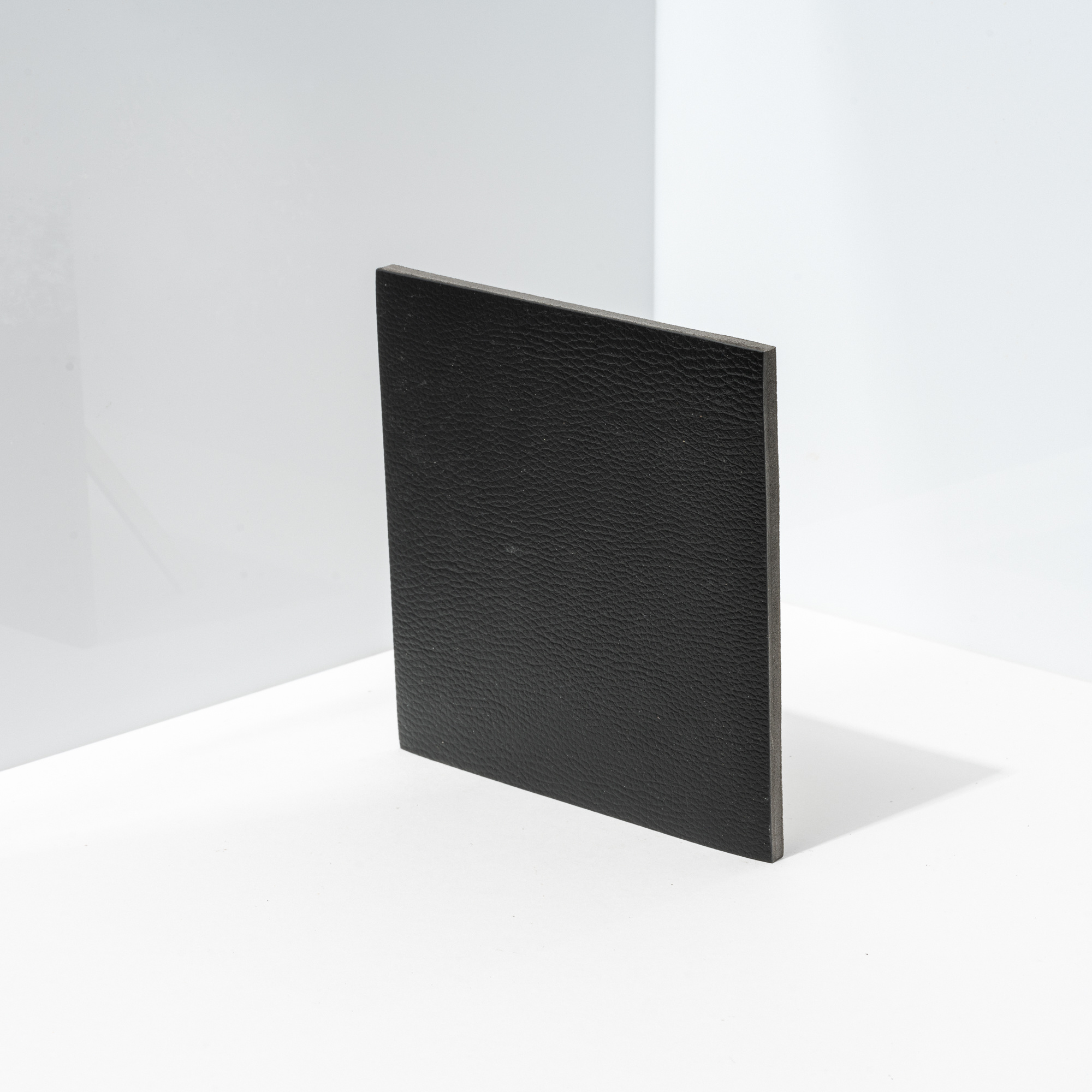
What is a soundproofing mass-loaded sheet?
Soundproofing mass-loaded sheets are heavy, flexible sheets that add extra mass to a structure. This helps reduce sound transmission through walls, floors, ceilings, vehicles, machines and technical enclosures. They are often used when you want to limit airborne noise, vibration or resonance.
A mass-loaded sheet is also known as a PVC mass-loaded sheet, a sound deadening mat or a soundproofing mat. The material is flexible, can be cut to size and is suitable for applications that call for a thin but heavy sound insulation layer.
Which mass-loaded sheet suits you best depends on the noise source, the substrate and the way the sheet is installed. For severe noise nuisance, a mass-loaded sheet is often most effective as part of a complete build-up, for example combined with acoustic foam, decoupling or an additional board material.
How does a mass-loaded sheet work?
Sound travels through the air and through structures. A mass-loaded sheet works mainly by adding mass. The heavier and denser a structure is, the harder it is for sound waves to set it in motion. As a result, less sound is transmitted to the other side of the wall, floor, cover or enclosure.
For vibration and resonance, the flexible structure of the sheet helps to dampen movement in the surface. This makes mass-loaded sheets suitable for vehicles, machine housings, pipework, technical rooms and lightweight partition constructions, for example.

What can you use soundproofing mass-loaded sheets for?
Mass-loaded sheets are versatile. They are particularly suitable where a surface is too light and therefore lets noise or vibration through. Think of thin walls, floors, vehicle panels, machine covers or technical enclosures.
- Homes: For adding mass to walls, floors or ceilings when dealing with noise from neighbours, installations or other rooms.
- Vehicles: For reducing engine noise, road noise and vibration in campervans, vans, boats and classic cars.
- Offices: For limiting disruptive noise between workstations, meeting rooms or technical rooms.
- Music studios: As part of a soundproofing build-up to limit sound transmission to the outside.
- Machines and industry: For damping vibration and adding mass to machine housings, covers or enclosures.
When should you choose a mass-loaded sheet?
Choose a mass-loaded sheet when you mainly want to block sound or reduce vibration. If you are looking to reduce echo in a room, a mass-loaded sheet on its own is usually not enough. For reducing echo, absorbent materials such as acoustic foam or panels are often more suitable.
In many projects a combination works best: a mass-loaded sheet for mass and sound blocking, topped up with absorbent material to reduce reflections, resonance or hollow sounds.
Mass-loaded sheet, sound deadening mat or soundproofing mat?
These terms are often used interchangeably, but there are small differences in how they are used. A mass-loaded sheet usually refers to a heavy, flexible sheet that adds mass. A sound deadening mat is often used for vibration and resonance, for example in vehicles. A soundproofing mat is a broader term for mats that help limit sound transmission.
On this category page you will find mass-loaded sheets suitable for a wide range of applications. Always check the thickness, weight, dimensions and recommended use for each product.
Installing soundproofing mass-loaded sheets
Good installation largely determines the result. Make sure the substrate is clean, dry and grease-free. Cut the sheet to size beforehand and avoid seams or gaps through which sound can still leak. Use a suitable contact adhesive or mounting sealant that matches the substrate and application.
- Measure the surface accurately before cutting the mass-loaded sheet.
- Finish seams as tightly as possible.
- Press the sheet down firmly for good adhesion.
- Combine the sheet with absorbent material if echo or resonance is also a problem.
- In vehicles and machines, check that the sheet can cope with heat, moisture and movement.
Why buy mass-loaded sheets from Geluidsisolatie Deal?
At Geluidsisolatie Deal you will find a focused range of soundproofing boards for a variety of applications. You can easily choose the mass-loaded sheet that suits your project, whether it is a home, vehicle, workspace, studio or machine.
- Focused range: A choice of mass-loaded sheets and other insulation materials for a wide range of noise problems.
- Practical to use: Flexible sheets that can be cut to size and applied to different substrates.
- Combination options: Suitable for use with acoustic foam, damping sheets or other soundproofing solutions.
- Advice when in doubt: Help with choosing the right solution for your situation.

Frequently asked questions about mass-loaded sheets
What are mass-loaded sheets and what are they used for?
Mass-loaded sheets are heavy, flexible sheets that add mass to a surface. They are used to reduce sound transmission, vibration and resonance in vehicles, machines, floors, ceilings and partition walls, among other things.
Are mass-loaded sheets suitable for sound insulation in vehicles?
Yes, mass-loaded sheets are suitable for vehicles such as campervans, vans, boats and classic cars. They help reduce engine noise, road noise and vibration. Always check that the chosen product is suitable for the temperature, moisture load and substrate in the vehicle.
How do I install a mass-loaded sheet?
Make sure the substrate is clean, dry and grease-free. Cut the mass-loaded sheet to size and glue it down with a suitable contact adhesive or mounting sealant. Press the sheet down firmly and avoid open seams or gaps, because sound can still get through them.
Can I combine mass-loaded sheets with other insulation materials?
Yes, this is often recommended. A mass-loaded sheet mainly helps with sound blocking and vibration damping. Acoustic foam or other absorbent materials help with echo, resonance and reflections. Together they make a more complete sound insulation solution.
Does a mass-loaded sheet also help against impact noise?
A mass-loaded sheet can reduce impact noise and vibration, but the result depends heavily on the construction. For impact noise, decoupling is often important. Where necessary, combine the mass-loaded sheet with a decoupling layer or an adapted floor, wall or ceiling build-up.
Which mass-loaded sheet do I need?
That depends on the noise source, the surface and the space available. Pay particular attention to the weight per m², the thickness, the flexibility and the substrate. If in doubt, it is wise to ask for advice, so that you choose not only the right product but also the right build-up.