


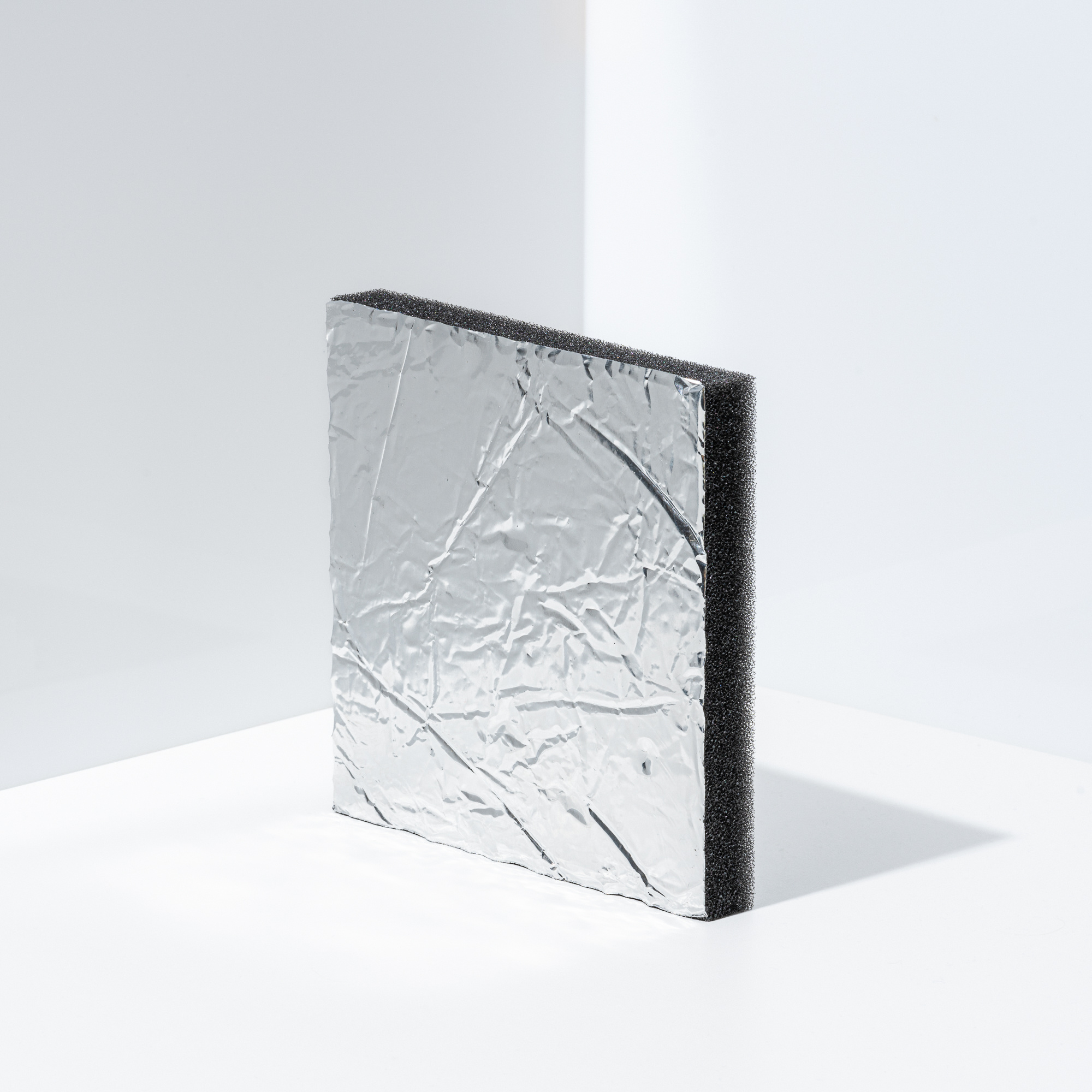
What is heat-resistant sound insulation?
Heat-resistant sound insulation is insulation material that helps to dampen noise in environments where heat is also present. Standard acoustic foam is not always suitable there, because heat can affect the performance, lifespan or safety of the material.
This type of insulation is used when sound absorption and thermal resistance are both important. Think of machine rooms, engine bays, technical installations, production environments and equipment enclosures. Depending on the application, you might choose heat-resistant acoustic foam, fibreglass mats or a version with a protective top layer.
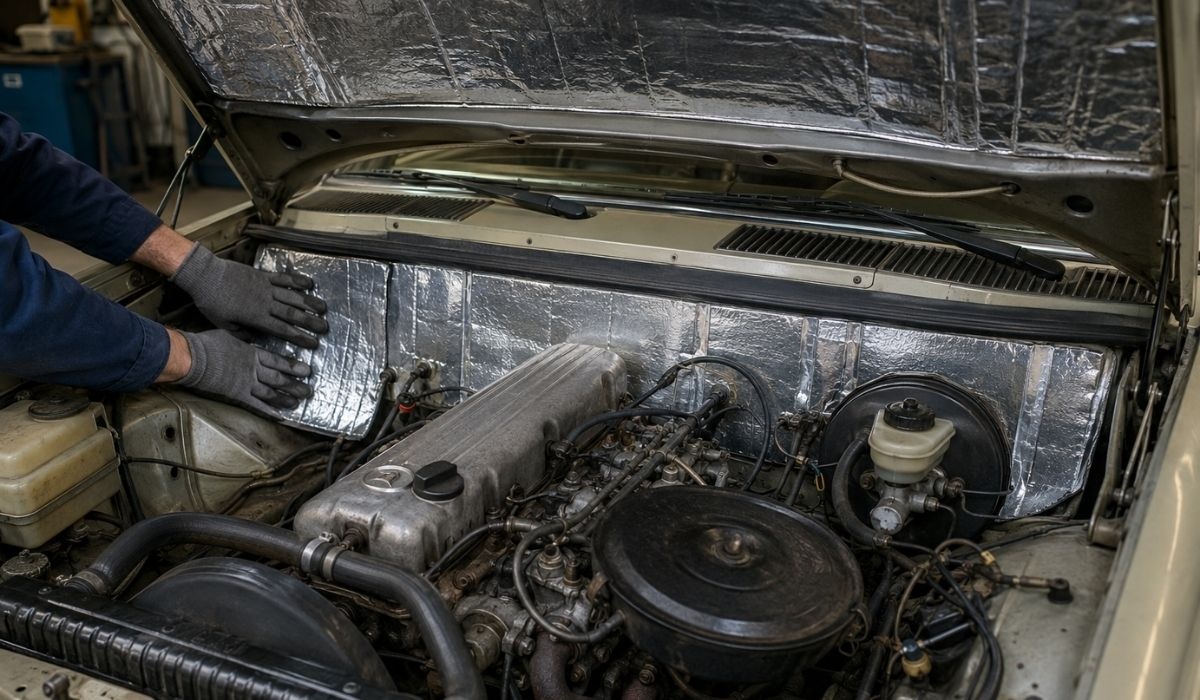
Which heat-resistant sound insulation do you need?
The right material depends on the temperature, the noise source, the available space and the way you want to fit the insulation. Below you can see which solution best suits your application.

Heat-resistant acoustic foam
Heat-resistant acoustic foam is suitable when you mainly want to reduce reverberation, reflections and airborne noise in a warm environment. The material is often used in technical spaces, machine enclosures, equipment housings and workshops where standard foam cannot adequately withstand heat.

Fibreglass mats
Fibreglass mats are used as thermal sound insulation in situations where higher temperatures and extra protection are important. They are interesting for technical applications, engine bays and installations where both heat resistance and sound dampening are needed.

Insulation with protective top layer
In applications involving dirt, moisture, radiant heat or technical loads, a protective top layer can be useful. An aluminium or other protective layer helps to protect the insulation material better and often makes the finish more durable in heavily used environments.
Choosing heat-resistant sound insulation: what should you look out for?
Not sure which heat-resistant insulation material is suitable? Then look not only at the noise source, but also at the temperature, the surface and the method of fitting. A machine enclosure has different requirements from an engine bay or technical room.
- High temperature: always check the maximum temperature resistance in the product specifications.
- Reverberation or echo: choose an absorbent material such as heat-resistant acoustic foam.
- Engine bay or technical installation: choose material that is suitable for heat, dirt and mechanical load.
- Limited space: pay close attention to the thickness of the material and the available fitting height.
- Fitting on warm surfaces: check whether self-adhesive layers are suitable or use extra mechanical fixing.
Which solution suits your situation?
Not every warm environment calls for the same type of heat-resistant sound insulation. The right choice depends on the noise source, the temperature, the surface and the available space. Use the guideline below as a first selection aid.
Machine enclosure
What should you look out for?
Reverberation, reflections, heat build-up and sufficient ventilation.
Possible solution
Heat-resistant acoustic foam or material with a protective top layer.
Engine bay or vehicle
What should you look out for?
Heat, dirt, vibration, limited space and secure fixing.
Possible solution
Fibreglass mats or thermal sound insulation with a protective layer.
Technical room
What should you look out for?
Reverberation, installation noise and maintenance access.
Possible solution
Heat-resistant absorbent panels or foam.
Production environment
What should you look out for?
Continuous noise, intensive use and material load.
Possible solution
Durable heat-resistant insulation material of suitable thickness.
This selection aid is intended as a practical first indication. Always check the product specifications before using material near a heat source or technical installation.
This table is intended as a practical first indication. Always check the product specifications before using material near a heat source or technical installation.
Thermal sound insulation for warm environments
Thermal sound insulation combines sound dampening with a material construction that is better able to withstand heat. This is especially useful when an installation, motor or machine continuously produces heat and at the same time causes disturbing noise.
It is important to determine beforehand what exactly you want to improve. Do you want less reverberation in a technical room? Then the focus is on sound absorption. Do you want to limit sound transmission to the outside? Then extra mass, draught sealing or decoupling is often needed. Do you want to place material close to a heat source? Then always check the product specifications and safety distance.
Important for fitting and safety
With heat-resistant insulation, fitting is at least as important as the material itself. A product can only function properly when it is used within the stated temperature limits and on a suitable surface.
- Check the maximum temperature: compare the product specifications with the temperature in your application.
- Take ventilation into account: do not enclose machines, motors or installations if heat needs to be able to escape.
- Choose the right fixing: at higher temperatures a self-adhesive layer alone may not be sufficient.
- Avoid contact with moving parts: never place insulation material where it can come loose or block components.
- Clean the surface: dust, grease and moisture can reduce adhesion and lifespan.
Not sure about the temperature, fitting or safety? Then ask for advice before you order or fit the material.
Heat-resistant insulation for machines and technical installations
Machines, fans, compressors, generators and technical installations can produce a lot of noise. By fitting heat-resistant insulation in or around a suitable enclosure, you can reduce reflections and annoying noise build-up.
Do make sure the installation continues to function safely. Take ventilation, maintenance access, heat dissipation and moving parts into account. Never place insulation material directly on components for which the material is not suitable.
When is heat-resistant sound insulation alone not enough?
Heat-resistant sound insulation mainly helps to dampen sound within a room, cabinet or housing. With persistent sound transmission to other rooms, absorbent material alone may not be sufficient.
In that case a combination may be needed with extra mass, draught sealing, vibration damping or a fully customised enclosure. Low tones, impact noise and vibration in particular often call for a different approach than absorbent foam or mat material alone.
That is why it is important to first determine which problem you want to solve: reducing reverberation, dampening machine noise, covering with heat-resistant material or limiting sound transmission. Based on that, you can choose the right heat-resistant insulation material more precisely.
Heat-resistant sound insulation tailored to your application
The right choice of material is important for a good result. The best solution depends on, among other things, the temperature, the type of noise, the available space, the surface and the fitting position. A thin absorbent layer can help against reverberation, whereas a heavier or combined build-up may be needed for persistent sound transmission.
Not sure which material is suitable for your machine room, engine bay or technical installation? Then get in touch for advice. That way you can choose more precisely and avoid using material that does not suit the temperature or application.

Frequently asked questions about heat-resistant sound insulation
What is heat-resistant sound insulation?
Heat-resistant sound insulation is insulation material that helps to dampen noise in environments where heat is also present. It is used for machines, engine bays, technical installations and industrial applications, among other things.
When do I need heat-resistant insulation material?
You need heat-resistant insulation material when standard acoustic materials are not suitable because of heat, technical load or placement near machines and installations. Always check the maximum temperature in the product specifications.
What is the difference between sound absorption and sound insulation?
Sound absorption reduces reverberation, echo and reflections within a room or enclosure. Sound insulation limits sound transmission to the outside or to other rooms. For sound transmission, a combination with mass, draught sealing or vibration isolation is often needed.
Where do you use thermal sound insulation?
Thermal sound insulation is used in warm technical environments, such as machine rooms, engine bays, production environments, vehicles, server cabinets and equipment enclosures.
What thickness of heat-resistant sound insulation do I need?
The right thickness depends on the noise level, the available space and the application. Thicker material can absorb more sound, but must fit within the available fitting height and temperature zone.
Up to what temperature is heat-resistant sound insulation suitable?
That differs per material and version. Always check the product specifications for the maximum temperature resistance and only use the material within the stated limits.
Can I fit heat-resistant sound insulation myself?
In many situations you can fit the material yourself. Make sure the surface is clean, dry and suitable. At higher temperatures or with vertical fitting, extra mechanical fixing may be needed in addition to any self-adhesive layers.
Does heat-resistant sound insulation also help against vibration?
Heat-resistant sound insulation mainly helps to absorb and dampen airborne noise. With vibration or impact noise, additional vibration damping or decoupling is often needed. Which solution is suitable depends on the machine, surface and fitting method.