
Insulating exhaust noise via the floor pan and doors noticeably reduces chassis noise. Discover the right materials and methods at Geluidsisolatie Deal.
You usually soundproof exhaust noise not by covering the exhaust itself, but by tackling the sound routes into the cabin. Especially in vehicles with a heavy engine, a diesel engine, a sports exhaust or little factory insulation, exhaust noise can enter via the floor pan, transmission tunnel, boot floor, wheel arches and sometimes the car doors.
You often hear this noise as a low drone, boom or persistent underbody noise while driving. In cars you notice this mainly in the cabin or boot. In commercial vehicles and vans the cargo area can amplify the noise. In campers, exhaust noise becomes tiring more quickly, because you often drive long distances and the interior contains more open or hollow sections.
On this page you can read how to reduce exhaust noise with the right sound insulation, which parts it is best to tackle and which material is suitable for cars, commercial vehicles, vans and campers.
When soundproofing exhaust noise you mainly look at the parts where noise and vibration enter the cabin. The exhaust itself gets hot and must be left free to hang. That is why you normally fit sound insulation on the interior side of the floor pan, tunnel, boot floor, cargo area or car doors, and not directly on the exhaust.
The best approach is usually a combination of vibration damping and mass. First you damp vibrations in the sheet metal with vibration damping material. After that you can add extra mass or a sound-insulating floor build-up for more damping and a neat finish.
Problem: low drone and underbody noise are transmitted via large metal surfaces.
Best approach: treat the floor pan on the interior side with vibration damping material and, if desired, a sound-insulating floor mat.
Problem: noise and vibration around the drivetrain, transmission and exhaust line enter via the tunnel.
Best approach: damp the tunnel on the inside and combine this with floor covering or an extra insulation layer.
Problem: exhaust noise at the rear is amplified by bare or hollow floor sections.
Best approach: apply vibration damping to the boot floor or cargo area and finish with floor covering or cargo area lining.
Problem: road noise, tyre noise and resonance amplify the exhaust noise in the cabin.
Best approach: combine the floor build-up with wheel arch insulation and, where necessary, car door insulation.
The best solution differs per vehicle. In a car the emphasis is often on the cabin floor, tunnel and boot. In a commercial vehicle or van the cargo area plays a major role. In campers it is not only about noise reduction but also about comfort on long journeys.
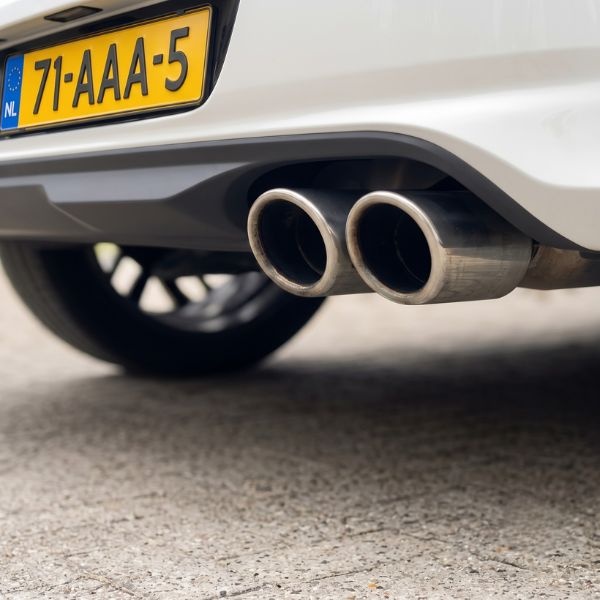
In cars you often hear exhaust noise as a drone or boom from the floor, transmission tunnel or boot. This occurs mainly in older cars, sporty cars, cars with a modified exhaust or vehicles with little factory insulation.
The practical approach is to deaden the floor pan, tunnel and boot floor from the inside. Where necessary you then add a sound-insulating floor mat or extra floor finish.
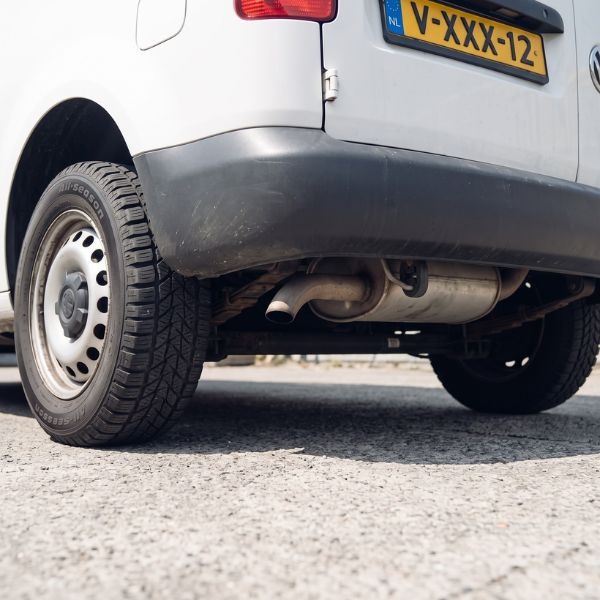
In a commercial vehicle or van, exhaust noise is often amplified by the cargo area. A bare floor, large metal panels and empty wheel arches make sound from below and behind carry through more strongly.
So start with the floor of the cargo area and the wheel arches. Combine vibration damping material with a practical floor finish that suits daily use.
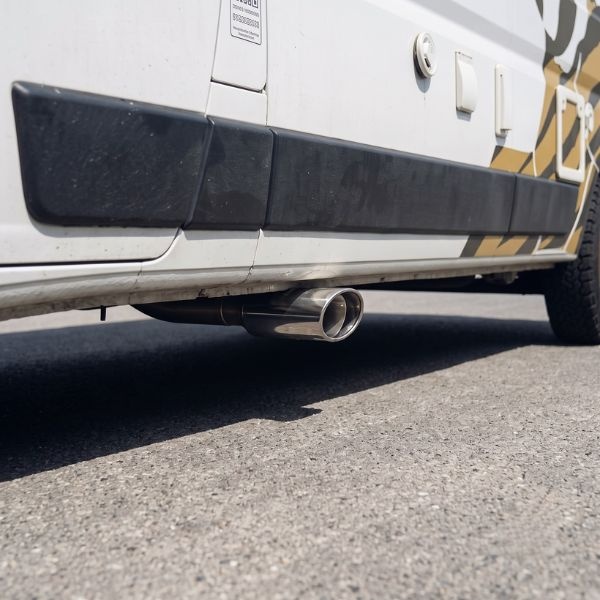
In campers, exhaust noise is mainly annoying on long journeys. A persistent drone from the floor, boot space or rear can become tiring, especially in older campers and van conversions.
The best approach is usually a combination of floor, wheel arch and rear compartment insulation. Then finish with a suitable floor or interior finish.
With a sports exhaust, heavy engine or diesel engine it is important to stay realistic. Sound insulation can reduce the transmission of drone and vibration to the interior, but does not change the character of the exhaust itself. A loud exhaust remains audible outside the vehicle.
If you mainly want less noise in the cabin, tackle the floor pan, tunnel, boot floor and wheel arches. If you want the exhaust to be quieter outside the vehicle, that is a technical exhaust issue and not standard interior insulation.

Which solution suits best depends on where the noise enters. Use the selection aid below as a starting point.
Suitable solution: self-adhesive vibration damping sheets on the floor pan
Why? The mass damps vibrations of the sheet metal and reduces the soundboard effect under the cabin.
Suitable solution: vibration damping on the transmission tunnel and additional floor finish
Why? The tunnel is close to the drive and exhaust line and can transmit a lot of low-frequency vibration.
Suitable solution: vibration damping on the floor and wheel arches, followed by a suitable finish
Why? Bare spaces amplify sound. By damping several metal parts, the space becomes less hollow.
Suitable solution: sound-insulating floor mat over the vibration damping
Why? A second layer adds mass and at the same time provides a more comfortable and neater finish.
With exhaust noise it is often sensible to treat a larger part of the floor pan than with, for example, wheel arches. The floor pan is a continuous surface that can transmit sound over a large part of the vehicle. So preferably treat the zones where the noise enters most strongly: front floor, transmission tunnel, rear floor, boot floor or cargo area floor.
That does not mean you should stick material everywhere at random. Work in a targeted way and look at the noise source. In a car with exhaust boom at the rear, the emphasis is often on the boot floor and rear floor pan. In a van or camper, the cargo area floor or cabin floor is often more important.
A recognisable situation is a car where the driver hears a low drone at the rear, especially at constant speed. The exhaust itself is technically fine, but the boot floor and rear floor pan sound hollow when you tap them. In that case the noise does not literally enter through an opening, but is amplified by vibrating sheet metal.
The logical approach is then to deaden the boot floor and rear floor pan first. After that a sound-insulating floor mat or neat boot finish can be added. That way you tackle the vibration first and then the extra mass and finish.
Exhaust noise, road noise and tyre noise often enter through the same kind of thin sheet metal parts. That is why it is smart to look not only at the exhaust, but at the entire route along which sound enters the vehicle.
Not sure whether you mainly hear exhaust noise, tyre noise or engine noise? Then start by determining where the noise comes from. With noise from below or behind, the floor pan, boot, cargo area and wheel arches are usually important. With noise from the front, the bonnet and engine bay are more logical.
Soundproofing exhaust noise works best when you treat the right parts and keep working safely. In practice things mainly go wrong when material is placed in the wrong spot or when the surface is not properly prepared.
With exhaust noise, safety is extra important. The exhaust line, catalytic converter, particulate filter, heat shields and surrounding parts can get very hot. So fit sound insulation on the interior side of the vehicle and not directly on hot exhaust parts.

Exhaust noise often enters via the floor pan, transmission tunnel, boot floor or cargo area. These metal parts can vibrate and amplify the sound, so you hear a drone or boom in the cabin.
In most cases you do not insulate the exhaust itself, but the parts through which the noise enters. Do not apply standard insulation material directly to hot exhaust parts, the catalytic converter, particulate filter or heat shields.
Against exhaust noise you usually use self-adhesive vibration damping sheets or damping mats on the floor pan, tunnel, boot floor or cargo area. For extra mass and finish you can use a sound-insulating floor mat on top.
That depends on where the noise enters. With exhaust noise you often treat a larger part of the floor pan than with wheel arches, because the floor is a large continuous surface. Work mainly on the zones where the drone or boom is most audible.
Yes, you can usually soundproof exhaust noise yourself on the interior side of the vehicle. Remove the floor or boot lining, clean the sheet metal thoroughly and apply vibration damping material firmly. Do not work directly on hot exhaust parts.
Yes, a sound-insulating floor mat can help as an extra layer on top of vibration damping. The vibration damping layer damps vibration in the sheet metal, while the floor mat adds extra mass and a neat finish.
Yes, especially when noise enters via the floor, cargo area or rear. In vans and campers you often combine soundproofing exhaust noise with floor insulation, wheel arch insulation and finishing of the cargo area or camper floor.
Find the order you'd like to withdraw
Enter your email address and order number.
Check your mailbox
If your details match an order, you'll receive an email with a link to view and manage it.