


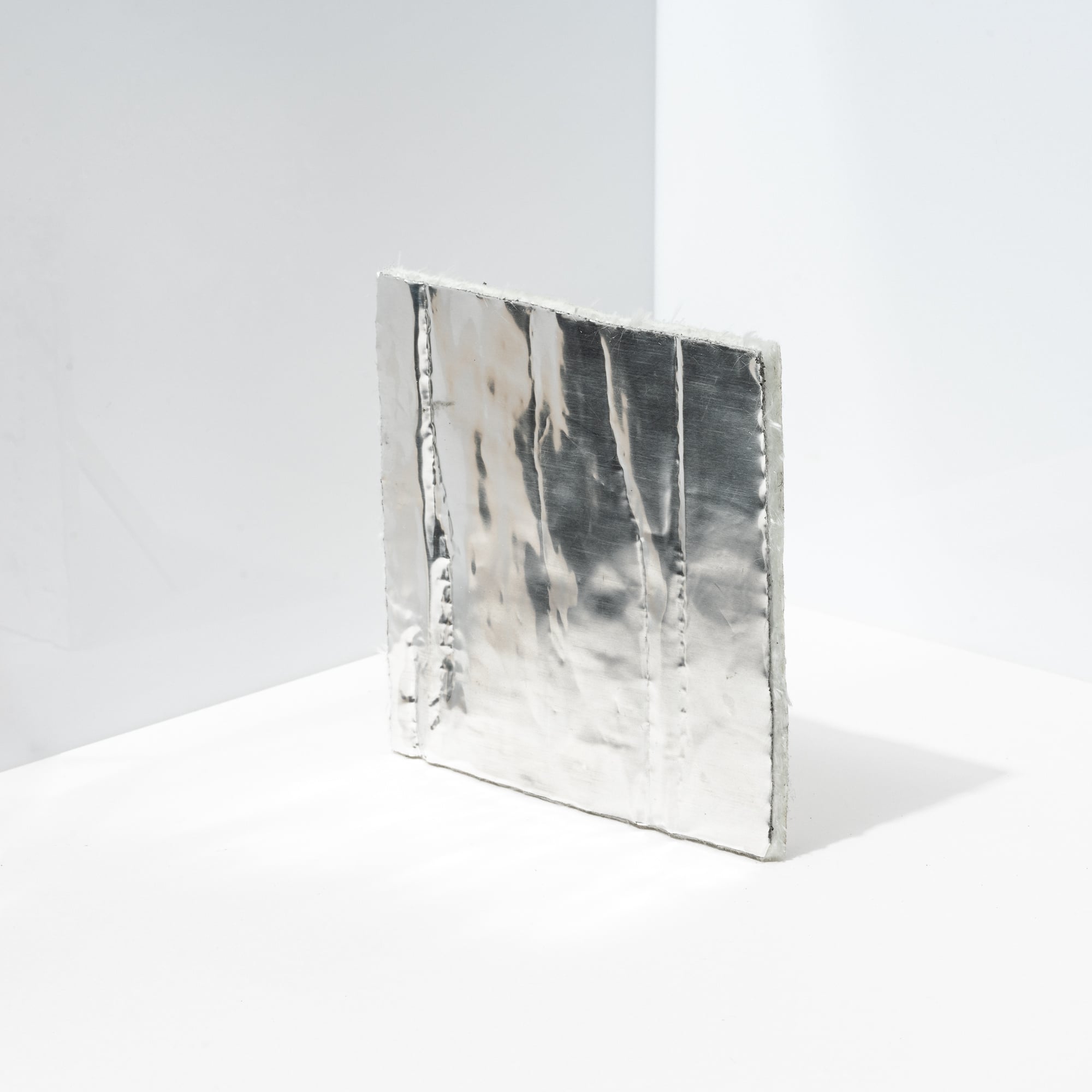
For machines, installations and vehicle components that produce a lot of heat, standard sound insulation often falls short: ordinary acoustic foam can melt, harden or lose its effect at high temperatures. Thermal insulation combines sound damping with resistance to heat, so you can tackle noise nuisance effectively even in hot environments.
When do you need thermal insulation?
Thermal insulation is the right choice as soon as a noise source also gives off heat. Think of machine rooms, engine compartments, technical enclosures and server cabinets, where ordinary insulation material can discolour, harden or come loose over time because of the heat. In these situations you need material that performs both acoustically and thermally, without one property coming at the expense of the other.
How does thermal insulation work?
Thermal insulation generally combines two properties in one material: a sound-absorbing or insulating core, and a heat-resistant or heat-reflecting top layer. Materials with an aluminium top layer reflect radiant heat, so the core of the material is affected less quickly and keeps its sound-damping effect for longer. This keeps the acoustic performance up, even when the ambient temperature rises considerably.
Two main types of material
- Heat-resistant acoustic foam: a foam with a protective, often aluminium, top layer, suitable for absorbing sound and damping reverberation in hot technical rooms and machine enclosures.
- Glass fibre mats: a layer that works as both sound insulation and thermal insulation, often used where even higher temperatures and extra protection are needed than foam can handle.
What should you look out for when choosing thermal insulation?
- Maximum temperature: always check up to which temperature the material and any self-adhesive layer can withstand.
- Thickness of the material: a thicker layer generally gives better sound absorption, in addition to the thermal effect.
- Type of top layer: an aluminium or other protective top layer helps not only against heat, but also against dirt and moisture.
- Installation: self-adhesive versions are easy to fit, but at higher temperatures additional mechanical fixing is sometimes needed.
Combine with other techniques if needed
Thermal insulation mainly solves sound absorption and insulation in hot spaces. Do you also want to prevent noise from getting through to other rooms, or remove vibration from a machine? Then combine thermal insulation with mass-loaded sheets (insulation) or vibration damping material, depending on the type of noise problem.
Choosing thermal insulation at Geluidsisolatie Deal
At Geluidsisolatie Deal you will find a complete range of heat-resistant sound insulation, including heat-resistant foam and glass fibre mats with aluminium top layer. Not sure which material best suits your temperature and noise problem? Get in touch with us, we will gladly help you work it out.
Frequently asked questions
When do I need thermal insulation instead of standard sound insulation?
As soon as the environment where you want to damp noise also gets quite hot, for example with machines or engine compartments where temperatures rise considerably. Standard insulation material can melt, harden or lose its effect here.
What is the difference between heat-resistant foam and glass fibre mats?
Heat-resistant foam is mainly aimed at sound absorption in hot environments. Glass fibre mats offer both sound insulation and thermal insulation, and are suitable for even higher temperatures.
Does thermal insulation also help against noise to other rooms?
No, thermal insulation is mainly aimed at absorption and damping within the room itself. For noise that travels to other rooms, you combine it with mass-loaded sheets.
Up to what temperature can thermal insulation withstand?
This differs per product and top layer. Always check the specifications of the chosen material, and also look at the temperature limit of any self-adhesive layer.
Can I fit thermal insulation myself?
Yes, most materials are self-adhesive and easy to fit yourself. At higher temperatures, additional mechanical fixing may be needed for a durable result.