


How exactly does sound absorption work?
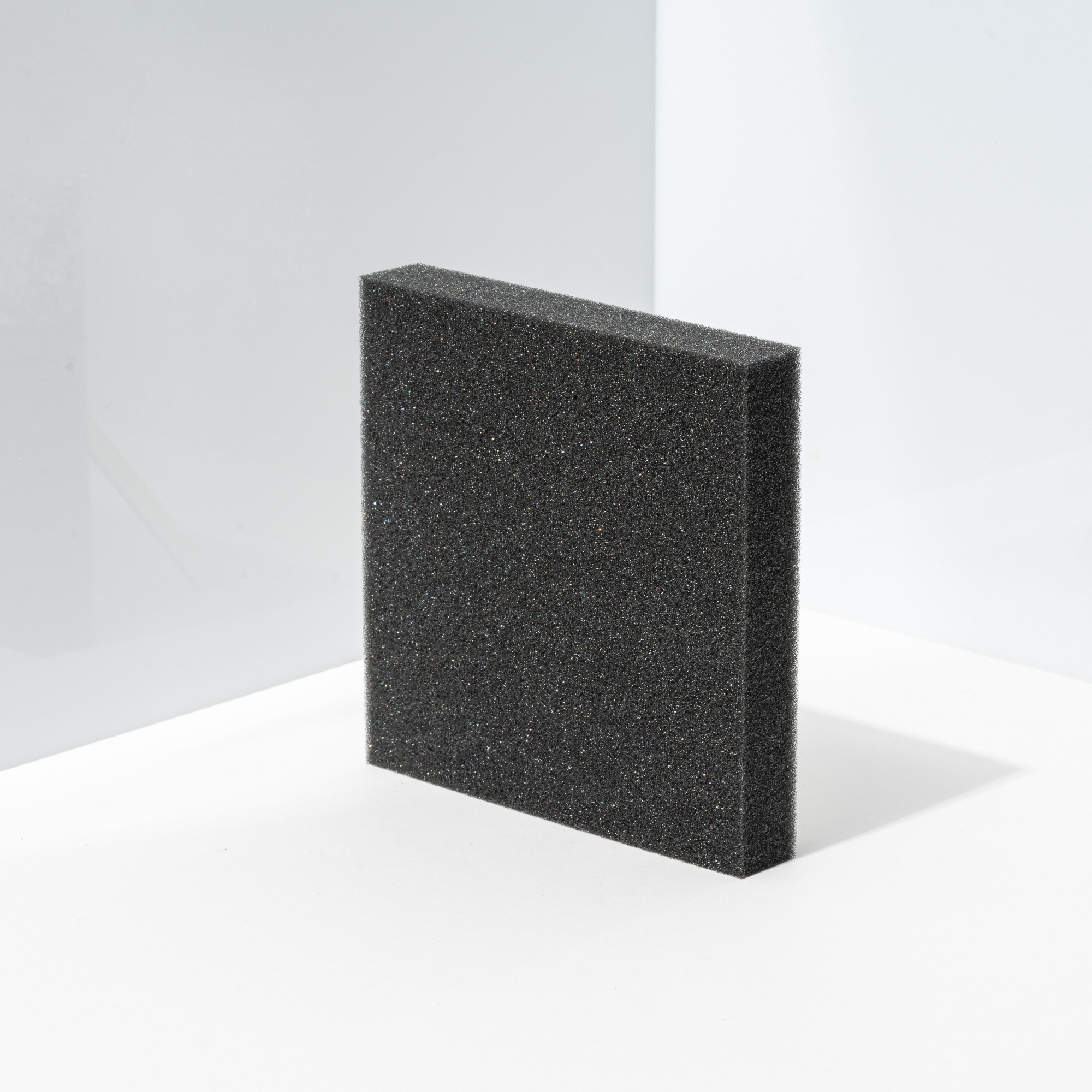
Sound absorption works by converting sound into a small amount of heat. This happens when sound waves penetrate porous or fibrous sound absorption materials. Think of foams, mineral wool or textile structures. The more open and thicker the material, the more effective the sound absorption, particularly for mid and high frequencies.
Important to know: sound-absorbing material is not the same as sound insulation. Whereas insulation blocks sound between rooms, sound absorption focuses on improving the acoustics within a single room.
Sound-absorbing panels and sheets for walls
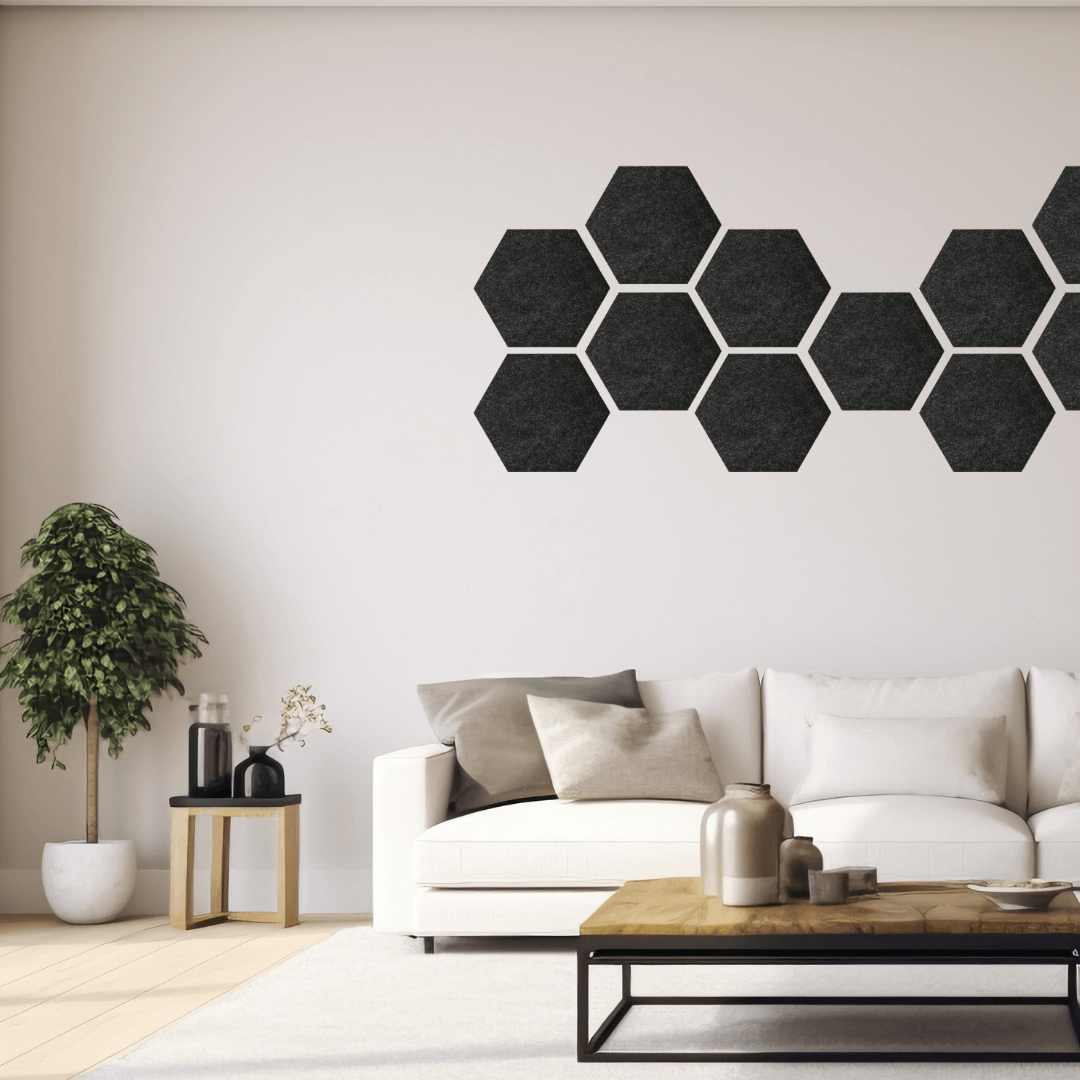
For walls, sound-absorbing panels and sound-absorbing sheets are the most popular solution. A sound-absorbing panel is mounted directly on the wall or held slightly away from it for extra effect. Sound absorption panels are available in various thicknesses, colours and finishes, so they also fit well aesthetically in an interior.
Sound-absorbing wall covering is ideal when you want to tackle larger surfaces. Think of a long wall in the living room or an office with a lot of glass. By placing several sound-absorbing walls strategically, you get balanced acoustics without the room sounding “dead”. A creative way to absorb sound is acoustic art, in other words a sound-absorbing painting. This is a sound-absorbing sheet with acoustic material and an artistic print, combining function and looks.
Examples of sound-absorbing materials
Pyramid foam
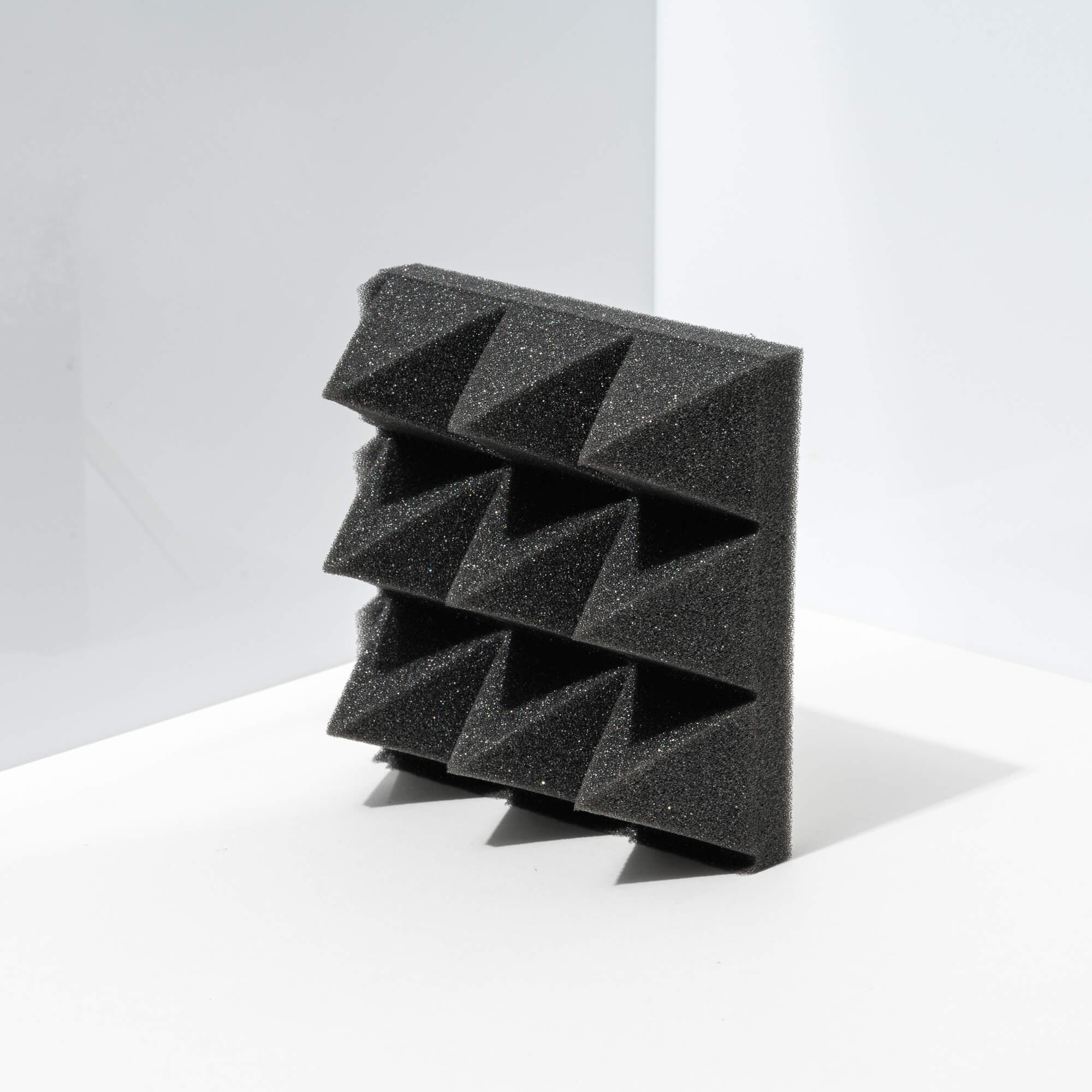
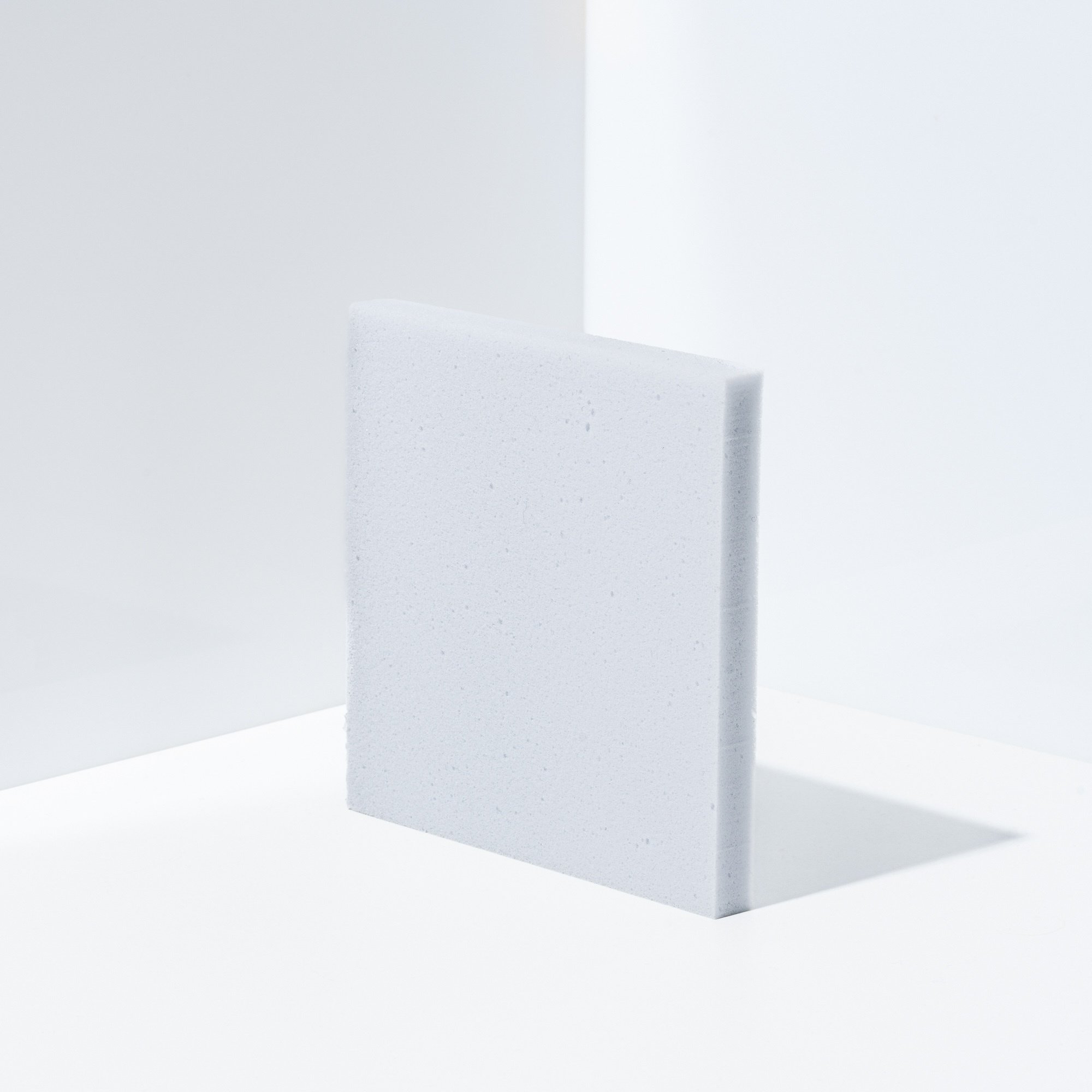
Pyramid foam is a popular choice for studios and workspaces. Thanks to the pyramid profile, sound is better absorbed across a wide frequency range. Because the pyramid profile, unlike the profile of egg crate foam, always fits together seamlessly, it is ideal for visible applications!
Ceiling sound absorption and ceiling panels
Besides walls, the ceiling plays a crucial role in sound absorption. Heat and sound rise, so a sound-absorbing ceiling is often very effective. Ceiling sound absorption solutions range from individual ceiling panels to complete sound-absorbing ceiling tiles.
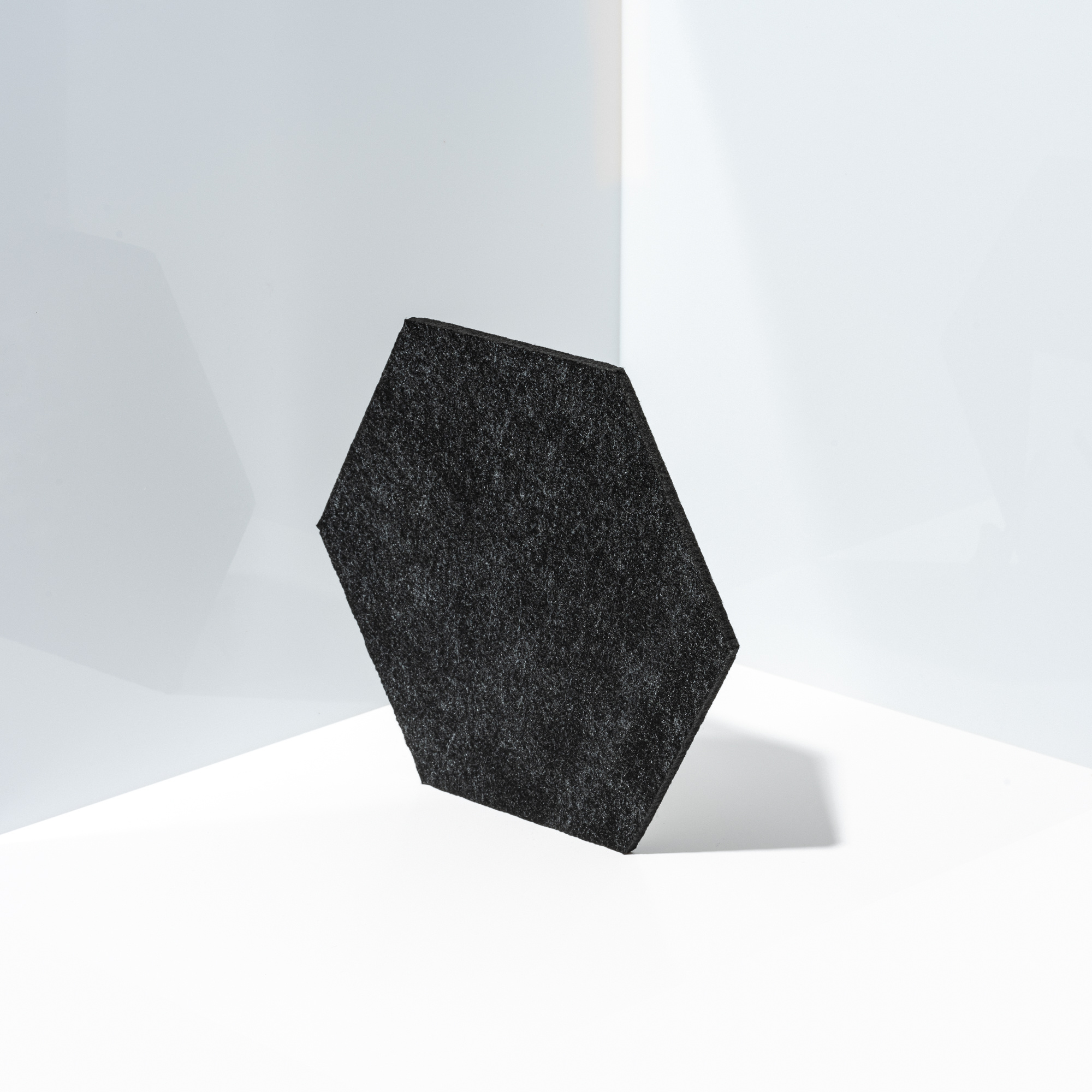
In homes, people often choose suspended panels made of acoustic felt or subtle sheets that blend into the ceiling. In larger spaces, such as offices or practice rooms, ceiling sound absorption tiles provide an even distribution of absorption across the room.
Our experience shows that ceiling sound absorption brings the most benefit in rooms with high ceilings or little furniture.
Sound-absorbing materials by situation
Not every room calls for the same solution. Sound-absorbing materials for the living room are often decorative and matched to the interior, such as fabric-covered panels or sound-absorbing paintings. In a home office, the focus is more on functional sound absorption panels that reduce speech noise.
For kitchens, hallways and other hard spaces, sound-absorbing sheets with a high absorption value are recommended. By combining walls and ceilings, you create a balanced whole that sounds and looks good.
